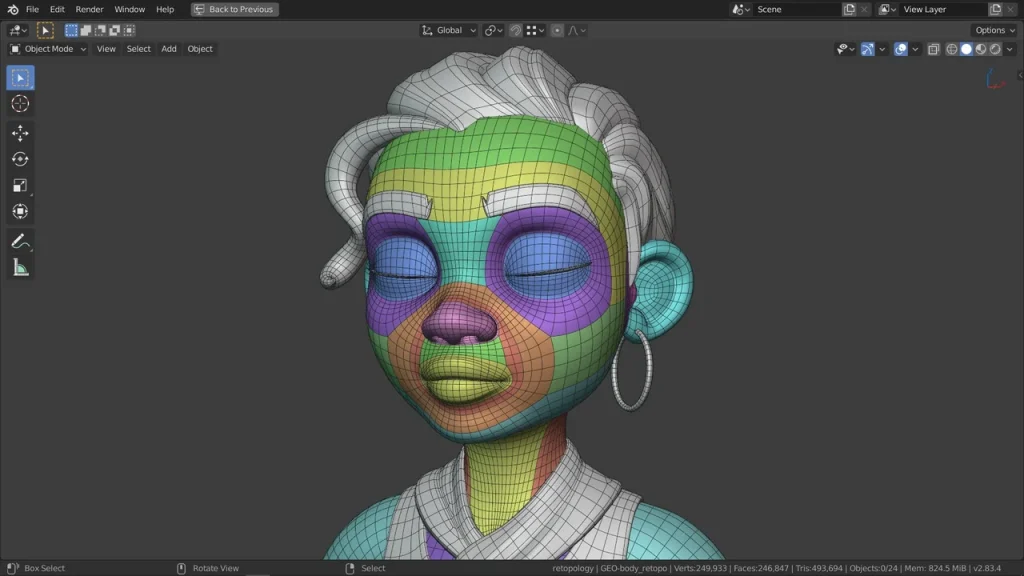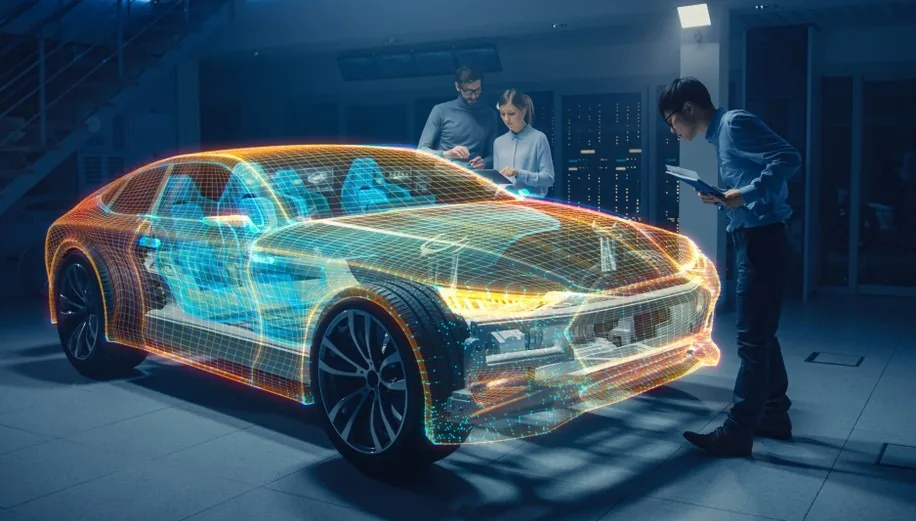
An interactive simulation takes 3D content and lets people operate it in real time, usually in a game engine such as Unreal or Unity. It is used for training, education and product demonstrations, where trying something safely in a virtual space is cheaper and clearer than doing it for real.
If you do it yourself, our Null Labs tool Null Migration Helper converts Unity scenes between URP and HDRP.
In the ever-evolving landscape of education and training, simulation emerges as a powerful tool with transformative potential. From virtual classrooms to lifelike scenarios, simulations are shaping the future of learning and innovation. Let’s explore how simulations are revolutionizing education, their applications, and the exciting possibilities they hold.
The Rise of Simulated Learning
- Virtual Classrooms and Labs:
- Simulated environments allow learners to step into virtual classrooms, laboratories, and workshops.
- Students can conduct experiments, practice surgical procedures, or explore historical events—all within a safe, controlled setting.
- Immersive Experiences:
- Augmented and virtual reality (AR/VR) simulations transport learners to different worlds.
- Imagine studying ancient civilizations by virtually walking through their cities or practicing emergency response in realistic disaster scenarios.
- Skills Training:
- Simulations hone practical skills. Pilots, surgeons, and firefighters use flight simulators, surgical simulators, and fire drills for hands-on training.
- Gamified simulations make learning engaging and effective.
Applications Across Disciplines
- Healthcare and Medicine:
- Medical students practice diagnosing patients, performing surgeries, and managing emergencies.
- Simulated patients exhibit symptoms, respond to treatment, and provide valuable learning experiences.
- Business and Management:
- Simulations teach decision-making, leadership, and strategic planning.
- Business students run virtual companies, analyze market trends, and face real-world challenges.
- STEM Education:
- Physics, chemistry, and engineering simulations help visualize complex concepts.
- Students experiment with circuits, ecosystems, and molecular interactions.
The Turing-like Test for Validity
- Modeling Validity:
- Simulated learners must accurately represent real-world behaviors.
- Surprisingly, many studies lack evidence that their models address this fundamental question.
- A Universal Criterion:
- Let’s propose a standard: the Turing-like Test for simulated learners.
- Just as Turing’s test evaluates artificial intelligence, this test assesses the validity of educational simulations.
The Road Ahead
- Complete Simulated Models:
- Future research should focus on comprehensive simulated learner models.
- Represent broader aspects of student learning, not just narrow facets.
- Validating the Models:
- Rigorous validation is essential.
- Simulations must pass the Turing-like Test—convincingly mimic real learners.
In the dynamic intersection of education, training, and innovation, simulations are our compass, guiding us toward a future where learning knows no bounds.
Related: Experiences and R&D · Tractor simulator rig · Technical visualization for industrial products
05 / Questions
Ask us anythingBefore you
get in touch.
It depends on scope: the number of assets or shots, the level of detail and the delivery formats. We send a quote after reviewing your brief and bill in USD by milestone.
It depends on scope; we confirm a schedule after the brief. Larger or more detailed projects are split into milestones so you can review progress along the way.
Simulations are usually delivered as builds for your target platform plus the Unity or Unreal project files, with 3D assets as FBX on request. We confirm the exact formats and specs in the brief so the files fit your pipeline.
You share the training or demo goal, users and hardware. We agree on scope and a quote, prototype the core interaction, build the full simulation, and refine it with your testing feedback before delivery.
Clients officially own the final files once payment clears. Null Station keeps the right to show the work in its portfolio.