
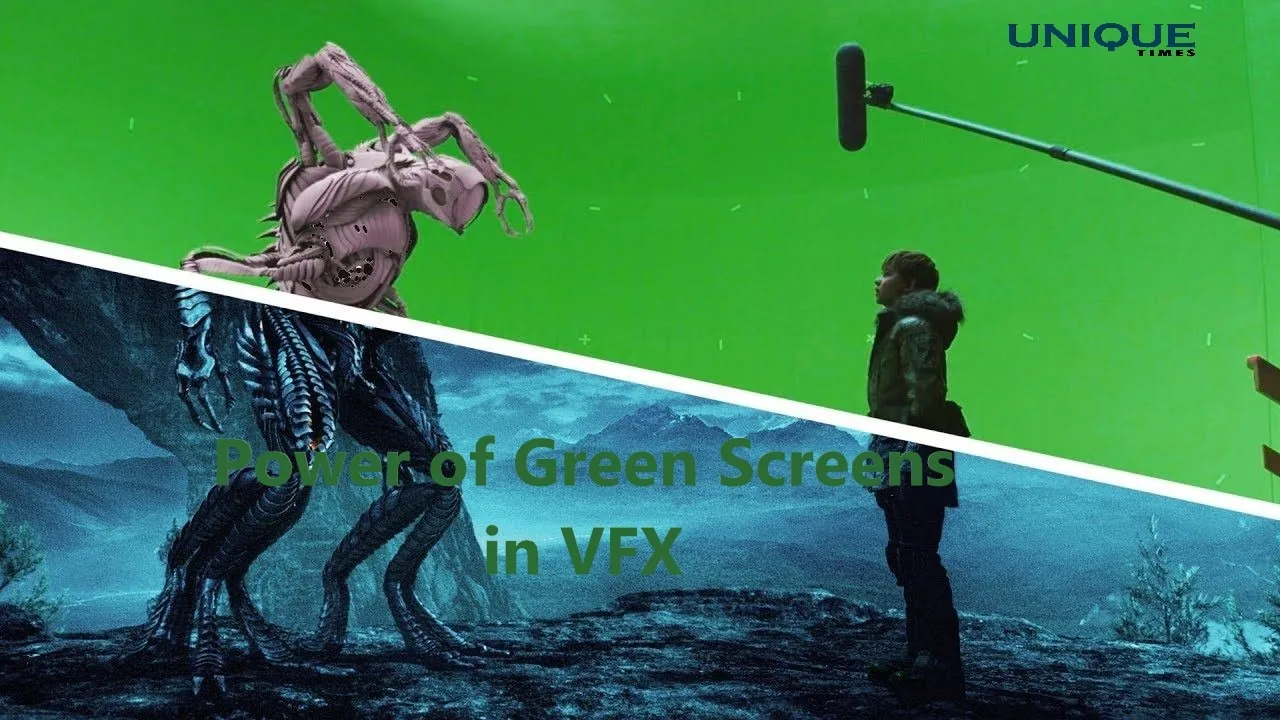
The biggest shifts in VFX today are virtual production on LED volumes, real-time engines in previsualisation and final pixels, machine-learning tools for rotoscoping and clean-up, and cloud rendering. Together they move more creative decisions earlier, onto the set, instead of leaving them for post-production.
If you do it yourself, our Null Labs tool Null Cast streams live webcam video or screen captures onto Blender meshes.
In the captivating world of filmmaking, visual effects (VFX) have transformed from a behind-the-scenes secret to a cornerstone of modern cinema. VFX artists are the unsung heroes who blend artistry with cutting-edge technology to bring fantastical worlds and awe-inspiring action sequences to life.
This blog will navigate the exciting landscape of VFX technology, exploring its rich history, groundbreaking trends, and the future that lies ahead.
A Brief History of VFX
The roots of VFX stretch back to the very birth of cinema. Pioneering filmmakers like Georges Méliès and Segundo de Chomón relied on practical effects, stop-motion animation, and meticulously crafted miniatures to weave their cinematic magic. Imagine the wonder audiences felt witnessing a rocket crash into the moon’s eye in Méliès’ iconic “A Trip to the Moon” (1902) – a testament to the power of early special effects.
The mid-20th century ushered in the golden age of practical effects. Monster movies and science fiction films thrived, with Ray Harryhausen leading the charge.
His painstaking stop-motion work in films like “The 7th Voyage of Sinbad” (1958) brought mythical creatures to life in a way that continues to inspire today. Meanwhile, Stanley Kubrick’s “2001: A Space Odyssey” (1968) pushed the boundaries with meticulously designed miniature space sequences, while George Lucas’ original “Star Wars” trilogy (1977-1983) masterfully combined practical models with innovative camera techniques.
The Digital Revolution: A New Era of VFX
The true game-changer arrived in the 1980s with the dawn of digital technology. “Tron” (1982) introduced audiences to the dazzling world of computer-generated imagery (CGI), immersing them in a digital landscape for the first time.
However, it was Steven Spielberg’s “Jurassic Park” (1993) that marked a monumental leap forward. The film’s groundbreaking CGI dinosaurs stunned audiences and showcased the immense potential of digital effects. Suddenly, the creation of lifelike creatures and fantastical environments became a reality.
The Latest Trends Shaping the Future of VFX
VFX technology continues to evolve at a rapid pace, constantly pushing the boundaries of what’s possible. Let’s delve into some of the most exciting trends shaping the future of VFX:
Real-Time VFX: This revolutionary technology allows for instant viewing and manipulation of VFX elements. Real-time rendering streamlines the creative process, enabling faster iteration times, greater creative control, and seamless integration with live-action footage.
AI and Machine Learning: Artificial intelligence and machine learning are rapidly transforming the VFX workflow. These technologies automate repetitive tasks like rotoscoping (isolating foreground objects) and 3D model generation, freeing up VFX artists to focus on more creative endeavors. Expect AI to play an even greater role in creating hyper-realistic and nuanced effects in the years to come.
Virtual Production: Virtual production utilizes real-time VFX to create immersive virtual environments for live-action filming. This allows filmmakers to achieve complex scenes that would be impractical or even impossible to shoot in the real world. Virtual production opens up a world of creative possibilities for directors and storytellers.
Augmented Reality (AR): AR overlays digital elements onto the real world, offering exciting possibilities for the future of VFX. Imagine interactive experiences where viewers can engage with virtual characters or objects within a film. AR has the potential to revolutionize the way audiences experience movies.
The Impact of VFX
VFX are more than just eye-catching visuals. They serve as a powerful storytelling tool, heightening emotions, transporting audiences to fantastical worlds, and bringing impossible scenarios to life. The next time you witness a superhero soar through the sky or a mythical creature come to life on screen, take a moment to appreciate the artistry and innovation behind the magic – the ever-evolving world of VFX technology.
Considering a Career in VFX?
As VFX technology continues to evolve, so do the opportunities for careers in this field. From VFX artists to software developers and technical directors, the industry offers a range of roles for those passionate about blending creativity with technology.
The future of VFX looks promising with advancements in AI, machine learning, and real-time rendering paving the way for even more spectacular visual experiences. Virtual production and AR will further expand the horizons of what is possible, making the boundary between real and virtual worlds increasingly seamless.
What is VFX technology?
VFX technology is the software, hardware and techniques used to create or alter imagery that could not be captured in camera. VFX stands for visual effects. It includes 3D modeling and animation, simulation of fire, water and cloth, camera tracking, rendering and compositing, plus newer tools such as real-time game engines, LED volumes and machine-learning assistants.
VFX technology trends to watch
These are the shifts changing how visual effects are planned and made right now. None of them replace artists; they move decisions earlier and remove repetitive work.
- Real-time engines for previs and final pixels. Game engines such as Unreal Engine and Unity let directors see lit, near-final shots while blocking a scene, and some shots are now rendered in-engine for final delivery.
- Virtual production on LED volumes. Actors perform in front of LED walls showing a 3D environment that moves with the camera, so reflections and lighting are captured in camera instead of added later.
- Machine learning in the pipeline. AI-assisted rotoscoping, denoising, upscaling, cleanup and face work cut hours of manual effort per shot. Artists still review and correct the results. Read more in AI in animation production.
- Scanning, photogrammetry and Gaussian splatting. Real locations and props are captured as 3D data, which speeds up set extensions and digital doubles.
- Open, shared scene formats. Formats such as OpenUSD let different tools and studios work on the same scene, which matters as more shows split work across vendors.
- Cloud rendering and remote pipelines. Render power can be scaled per project, and teams in different countries can review and work on the same shots.
- VFX beyond film. The same techniques now drive 3D commercials, product films and outdoor anamorphic display ads, where CG is built for a specific screen rather than a cinema.
What these trends mean if you are commissioning VFX
- Decide earlier. With real-time previs and virtual production, more of the look is fixed before or during the shoot, so references and approvals need to come sooner.
- Ask about the pipeline. Which engine, renderer and file formats a studio uses affects how easily work can move between vendors and be updated later.
- Treat AI as a tool, not a shortcut. It speeds up cleanup and iteration, but quality still depends on supervision and review.
See how these techniques fit a real schedule in how visual effects fit a production, or explore our 3D visualization and films and 3D product animation services.
Related: 3D visualization and films · The New Beginning · How visual effects fit a production
05 / Questions
Ask us anythingFAQs.
There are many software programs used in VFX, but some of the most popular include:
- Maya: Used for 3D animation, modeling, and character creation.
- Houdini: Powerful for simulations, particle effects, and destruction.
- Nuke: Industry-standard software for compositing, which is the process of combining various elements (live-action footage, CGI, etc.) into a final image.
- Adobe After Effects: Offers motion graphics capabilities and can be used for VFX compositing as well.
Real-time rendering allows VFX artists to see their creations instantly, streamlining the workflow and enabling faster feedback and adjustments. This can be especially beneficial for complex scenes or those involving interaction between live-action elements and VFX.
Artificial intelligence and machine learning are automating repetitive tasks in VFX, freeing up artists to focus on more creative aspects. AI can be used for rotoscoping, 3D modeling, and even creating realistic facial expressions for characters.
If you have a passion for movies, a creative mind, and an aptitude for technology, then VFX could be a great career choice. The field offers a variety of specializations, so you can find a role that aligns with your interests and skills. Be prepared for a challenging but rewarding career path that requires continuous learning as technology evolves.
VFX stands for visual effects: imagery created or changed digitally, usually after filming, to show something that could not be captured in camera. It includes CGI, compositing, simulation and digital cleanup.
Virtual production combines live filming with real-time 3D. The most visible form is an LED volume, where actors perform in front of LED walls displaying a 3D environment that moves with the camera, so lighting and reflections are captured in camera.
Not exactly. CGI (computer-generated imagery) is the 3D part of visual effects. VFX is the wider category that also includes compositing, rotoscoping, cleanup and combining CG with live footage.