
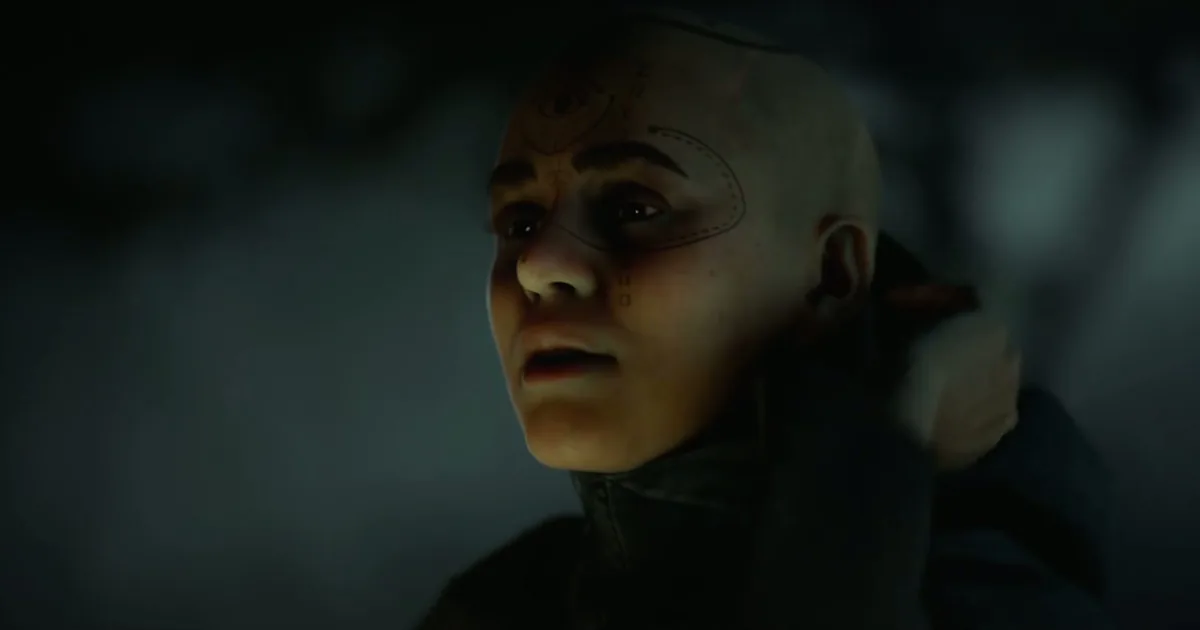
Silence of Darkness is a Blender 3D music video made by Null Station and released on the Null Plus YouTube channel. This case study shows how we built its graveyard, characters, lighting, smoke effects and sound across 40 shots.
The video runs 2:42 plus a logo opener, and its final frames were rendered in Blender Cycles at 1920 × 1080. If you need a similar piece, see our 3D visualization and film production service.

| Project | Silence of Darkness, Blender 3D music video |
| Client | Null Plus original: an in-house Null Station production, no external client |
| Deliverables | 3D animated music video · environment design · character modelling and rigging · motion-capture animation (Mixamo, Rokoko) · facial animation (Faceit, iClone) · lighting · VFX · sound design · compositing and grade |
| Role / team | Directed by Ratul Biswas · Co-directed and produced by RTB Ruhan · Music produced by Nasif Nipu · Null Station team |
The brief and objective
The video had to hold one feeling from the first frame to the last: dread, ancient mystery and the supernatural. The environment, the lighting and the effects all had to land in the same mood. The characters carried the story with almost no dialogue.
Our approach and creative direction
We treated the film as one connected system, not a set of separate departments. The graveyard, the lighting and the effects were planned together.
Grounded in real places
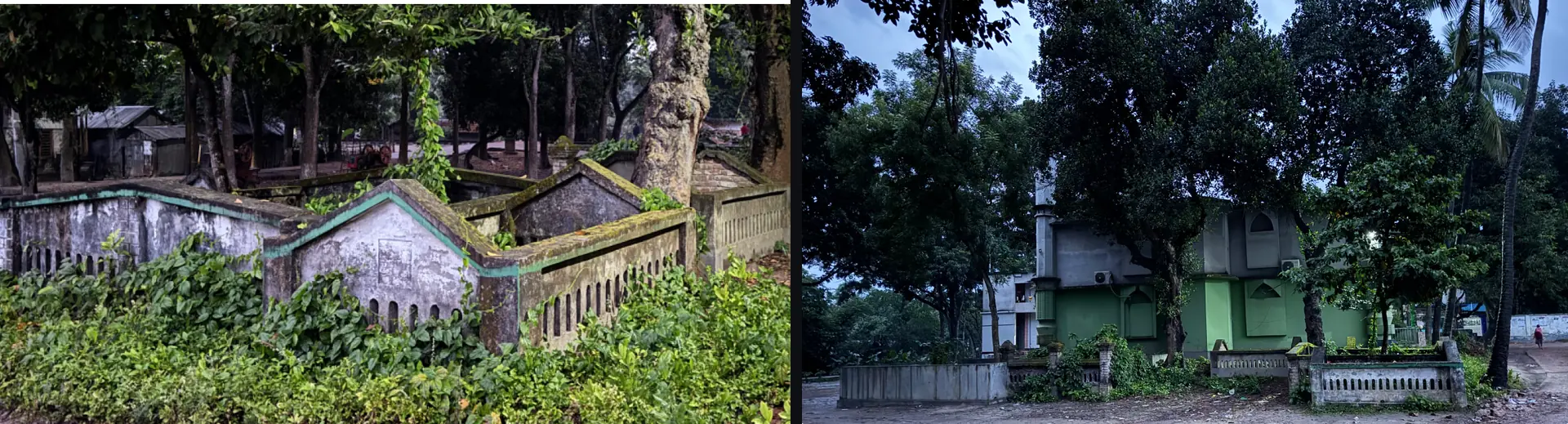
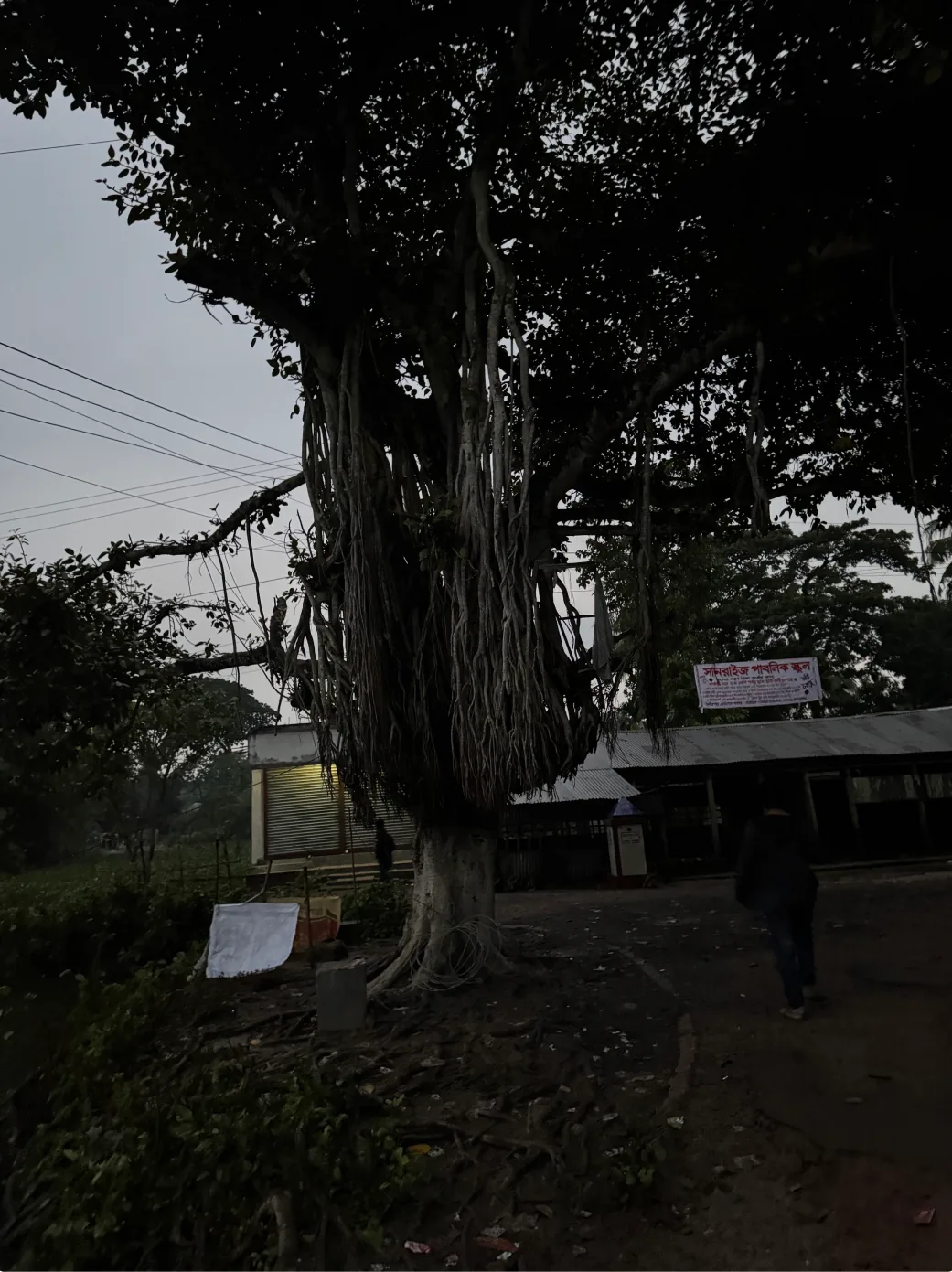
We started on location. Photography of ruins, weathering and overgrowth set the rules for how this world ages and decays. The hero banyan tree stays botanically accurate, and we pushed its scale until it felt ancient.
Locking the mood before the cost
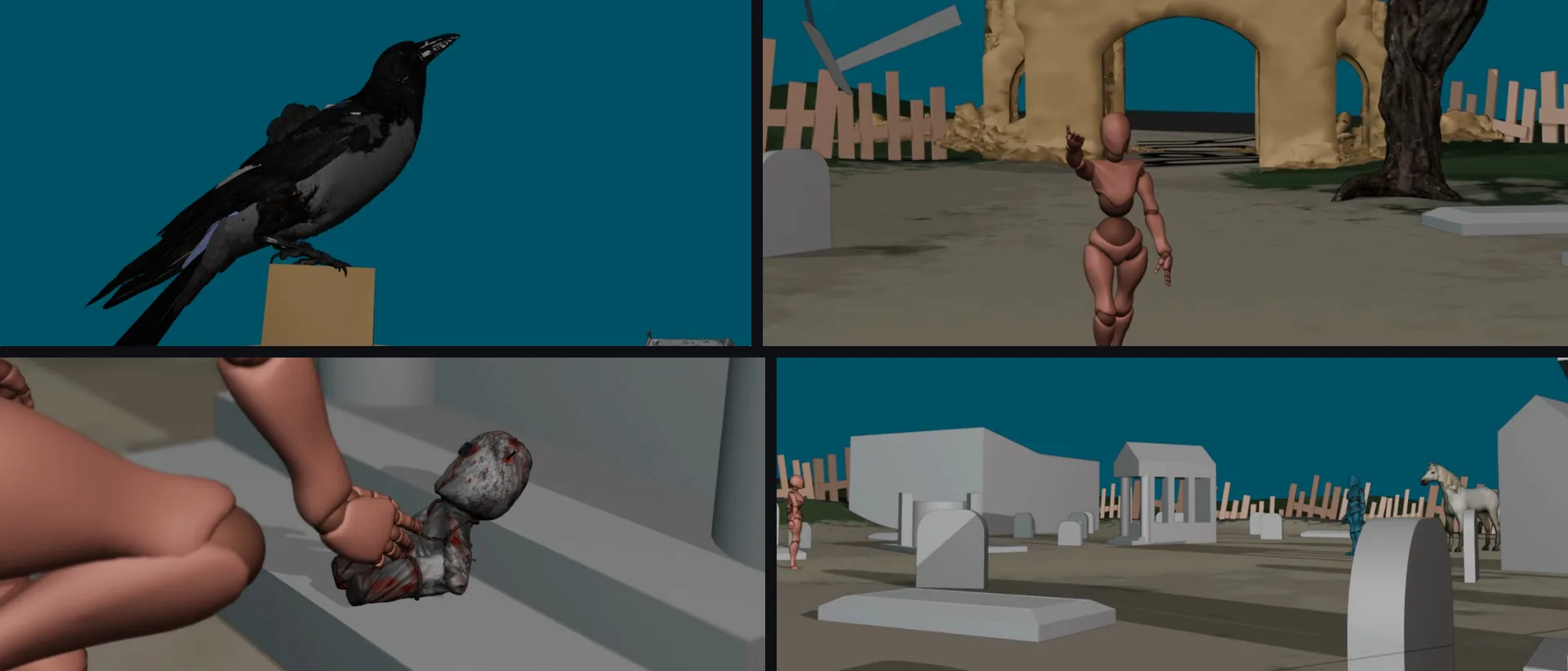
Mood boards fixed the palette, the lighting style and the atmosphere first. Then 3D previs, with blockout sets and basic character rigs, locked every camera angle, composition and beat of timing.
Behind the build and craft
A world built for decay
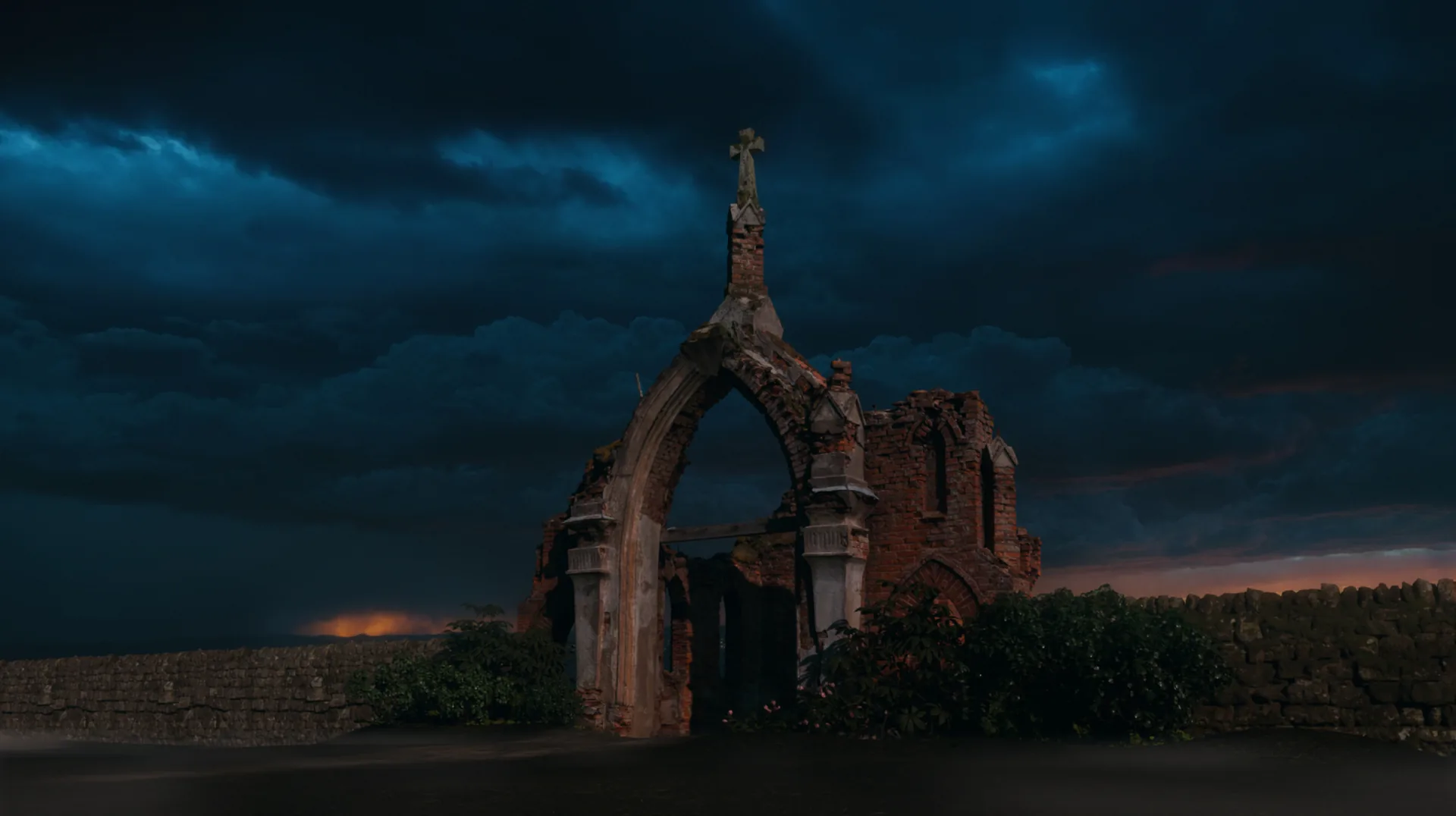
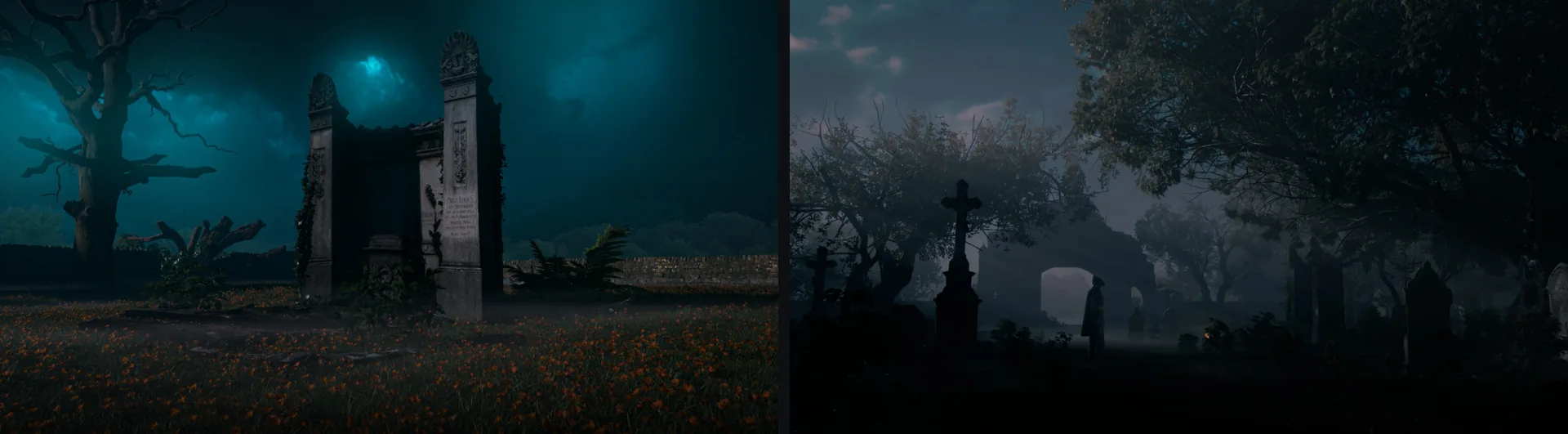
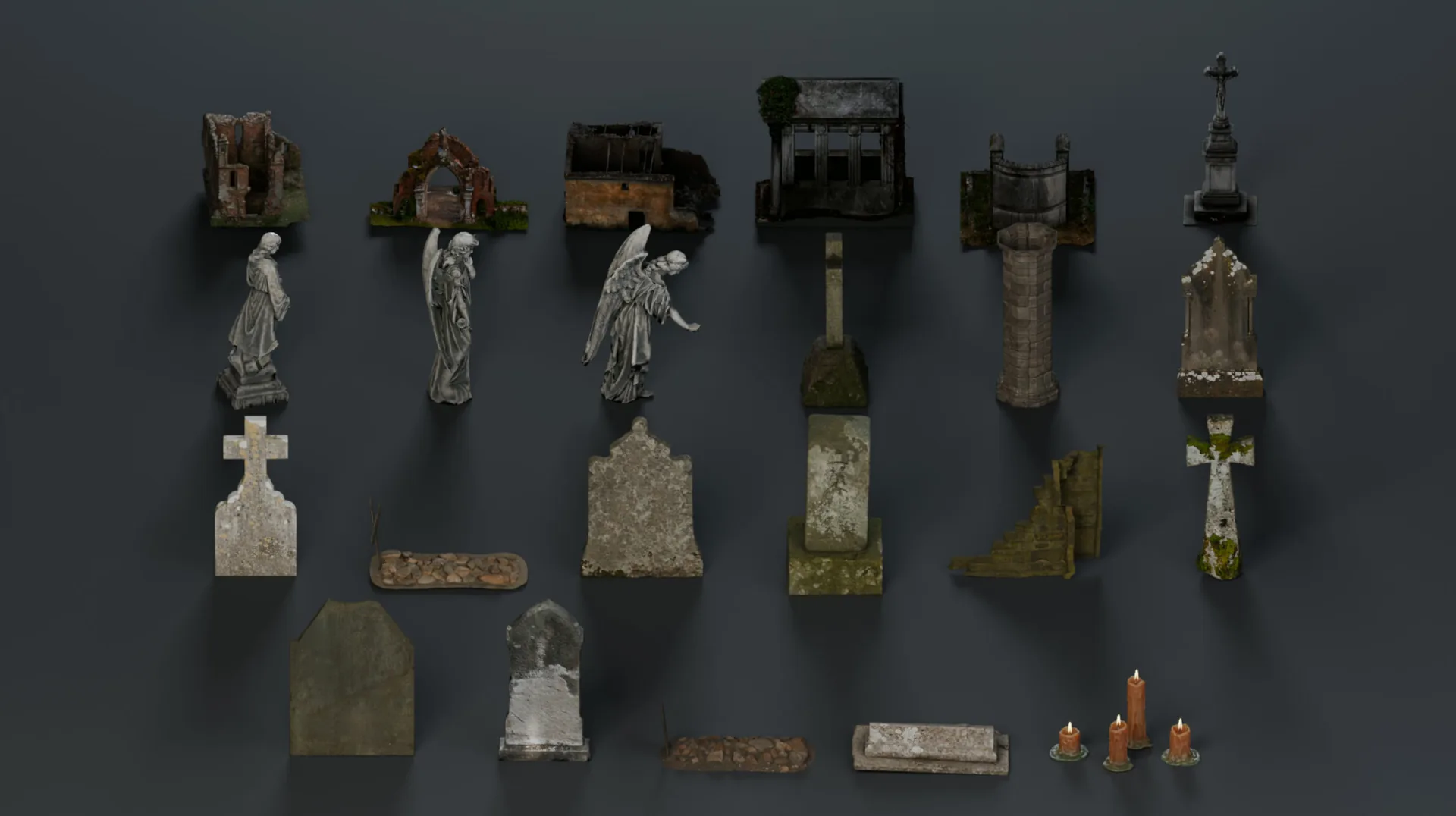
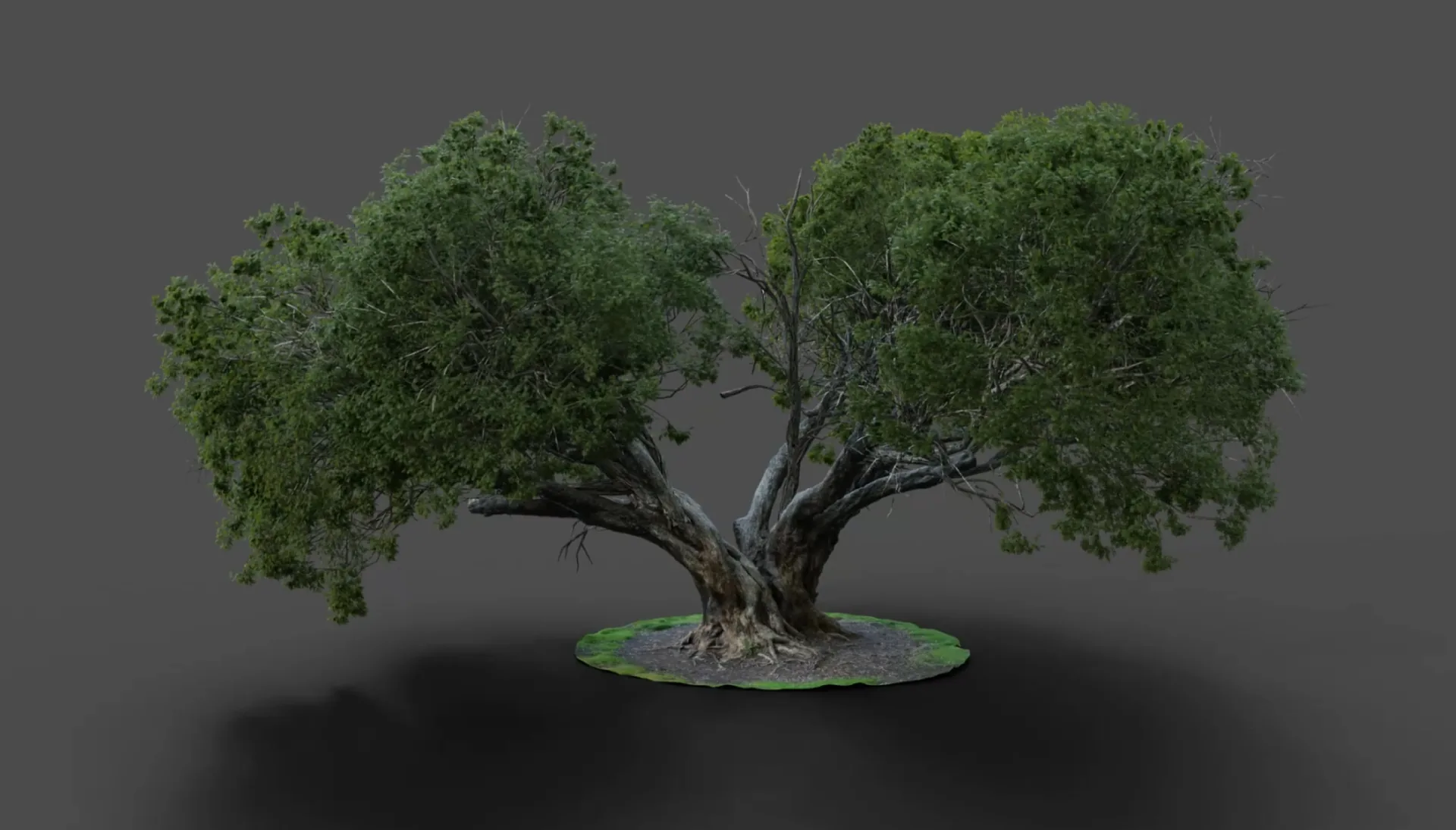
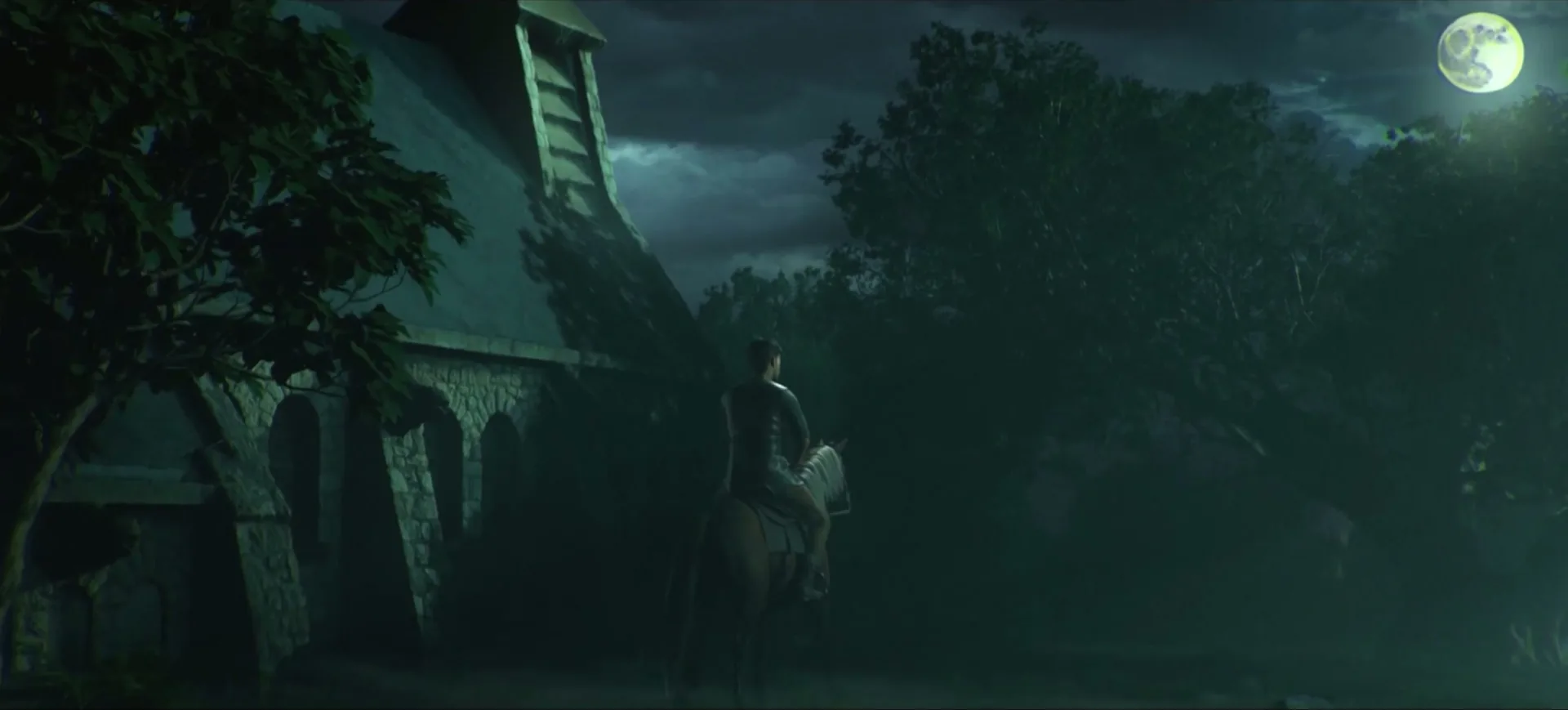
A rundown church and gnarled banyan trees anchor every composition. Around them we assembled a library of tombs, angel statues, ruins and trees from photogrammetry scans and asset libraries. We chose them to match our location research, then dressed, textured and lit them for the film. A modular kitbashing workflow let us prototype layouts fast and still finish with dense, detailed graveyard scenes.

Procedural scattering, distinct biomes
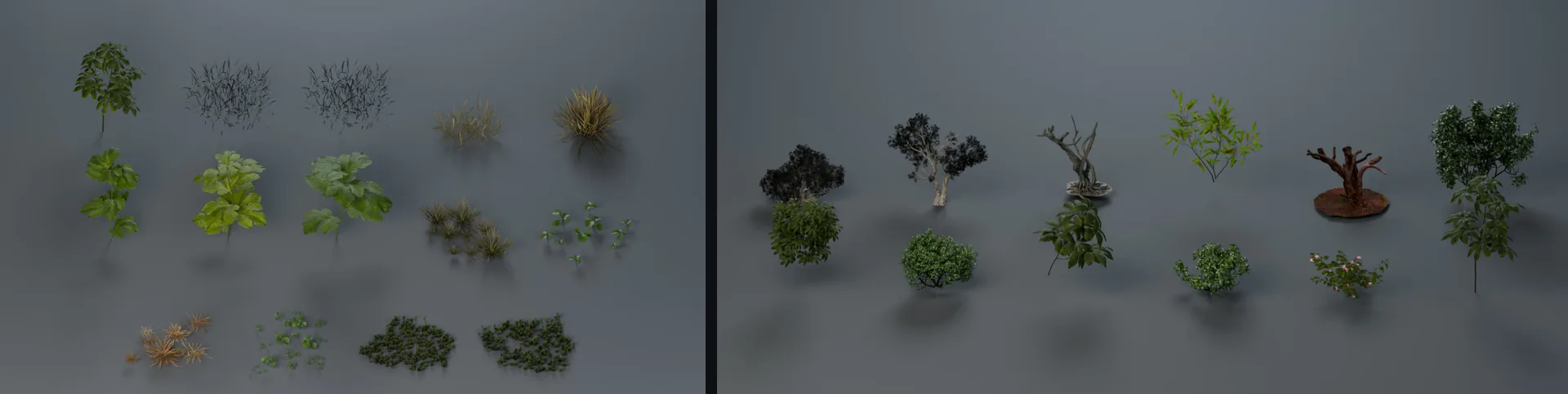
Hand-placing a graveyard this size was not an option. Rule-based scattering, driven by weight maps, distributed thousands of assets such as wild grass, small graves and scattered bones. That gave us distinct biomes, from dense overgrown patches to sparse, bone-littered clearings.
Characters built to act without words
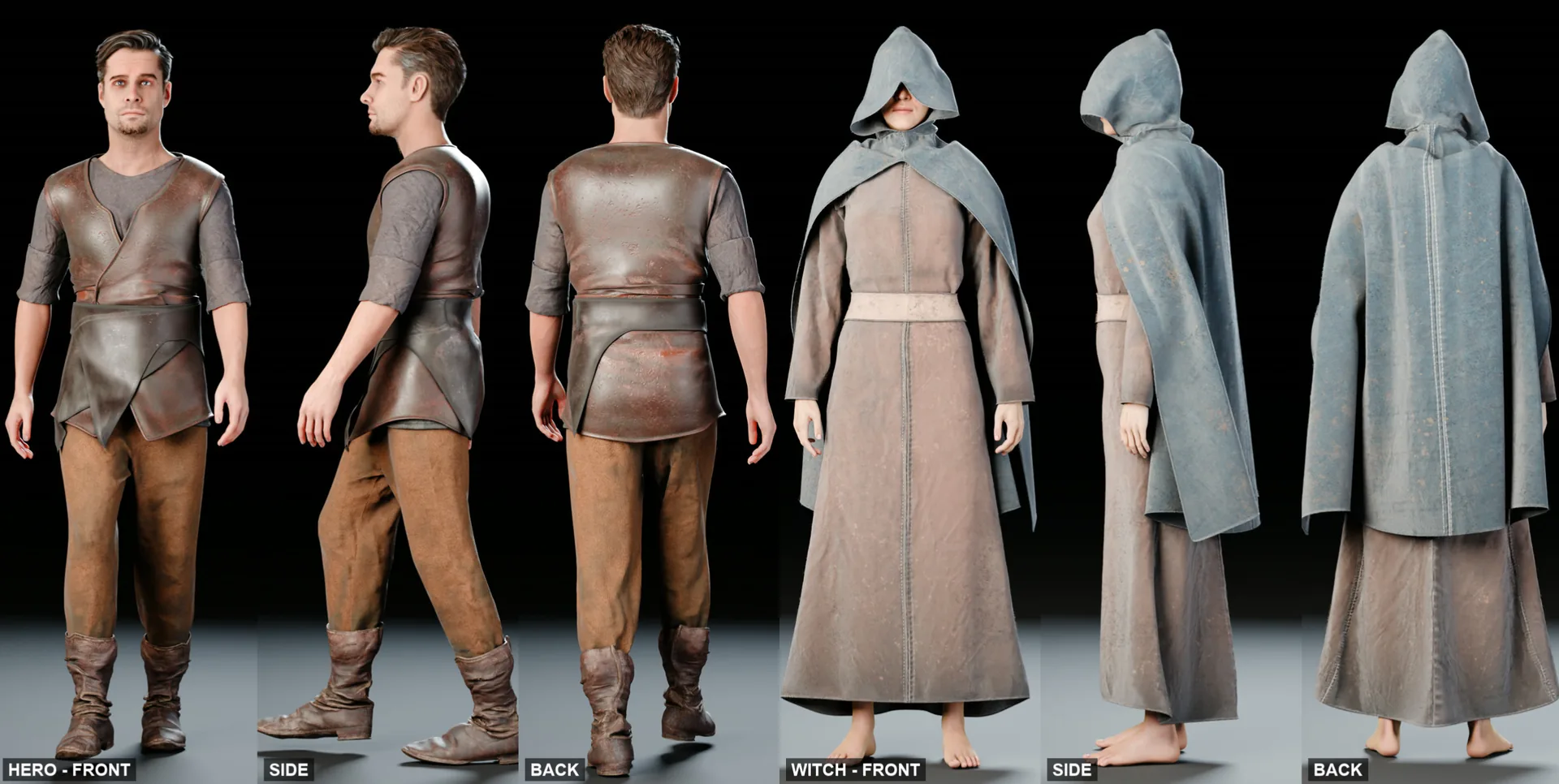
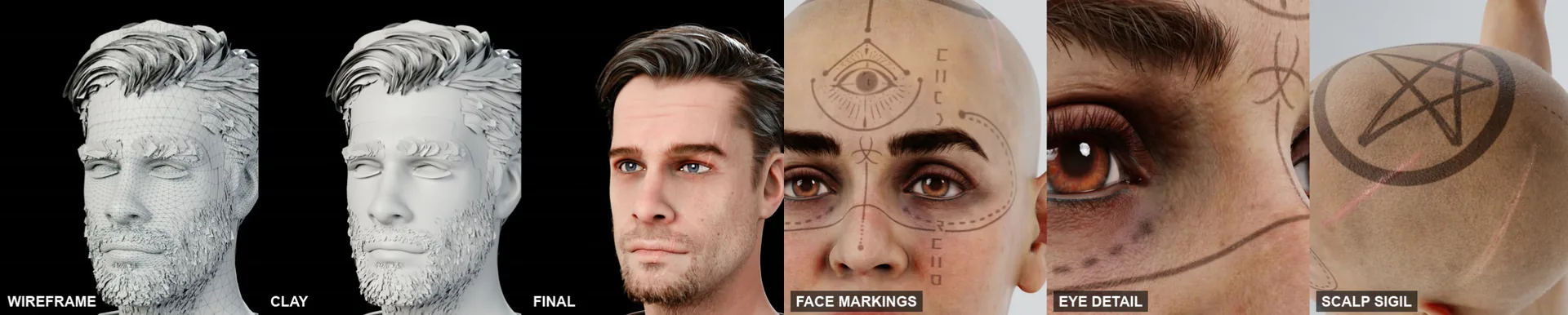
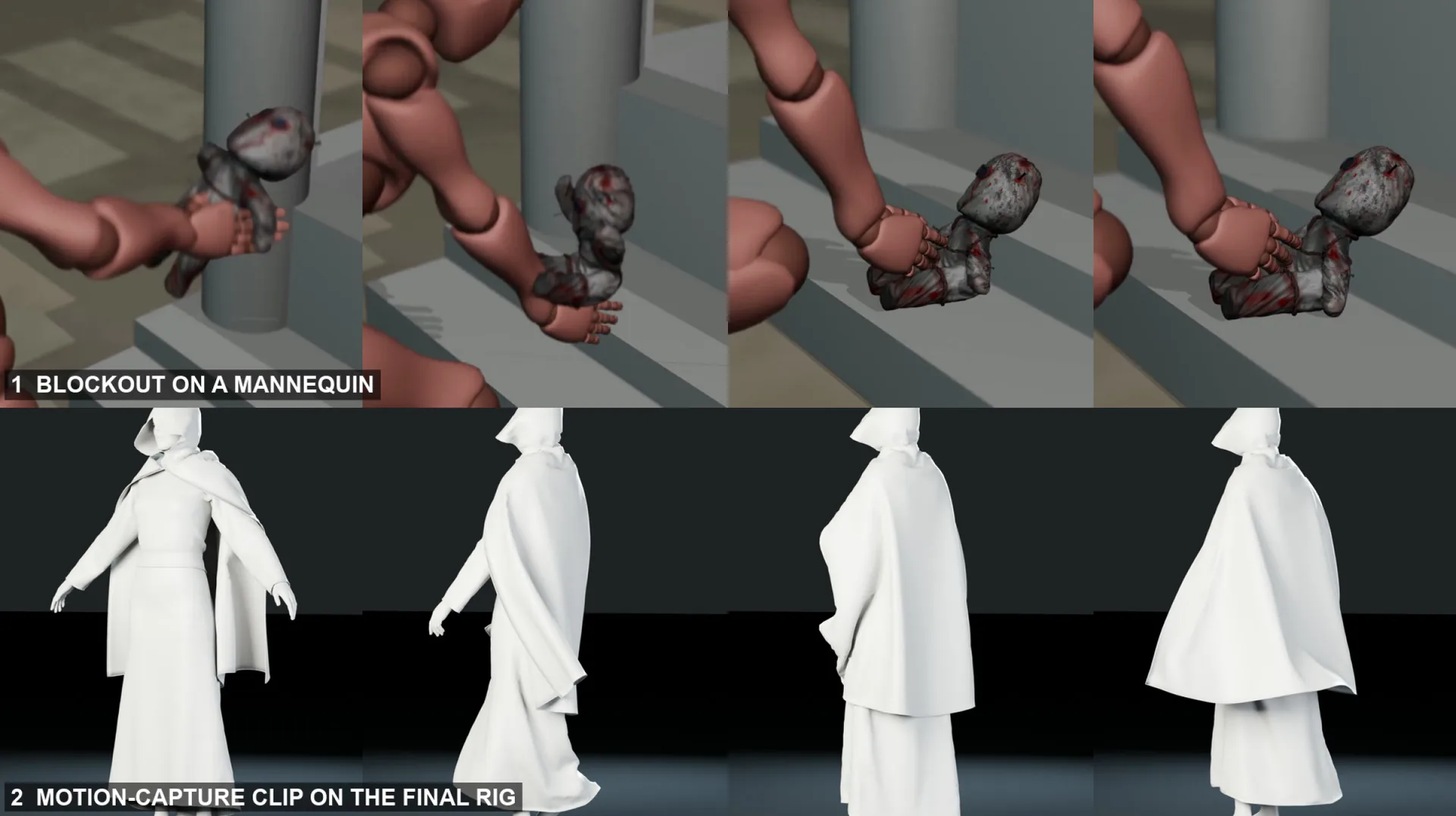
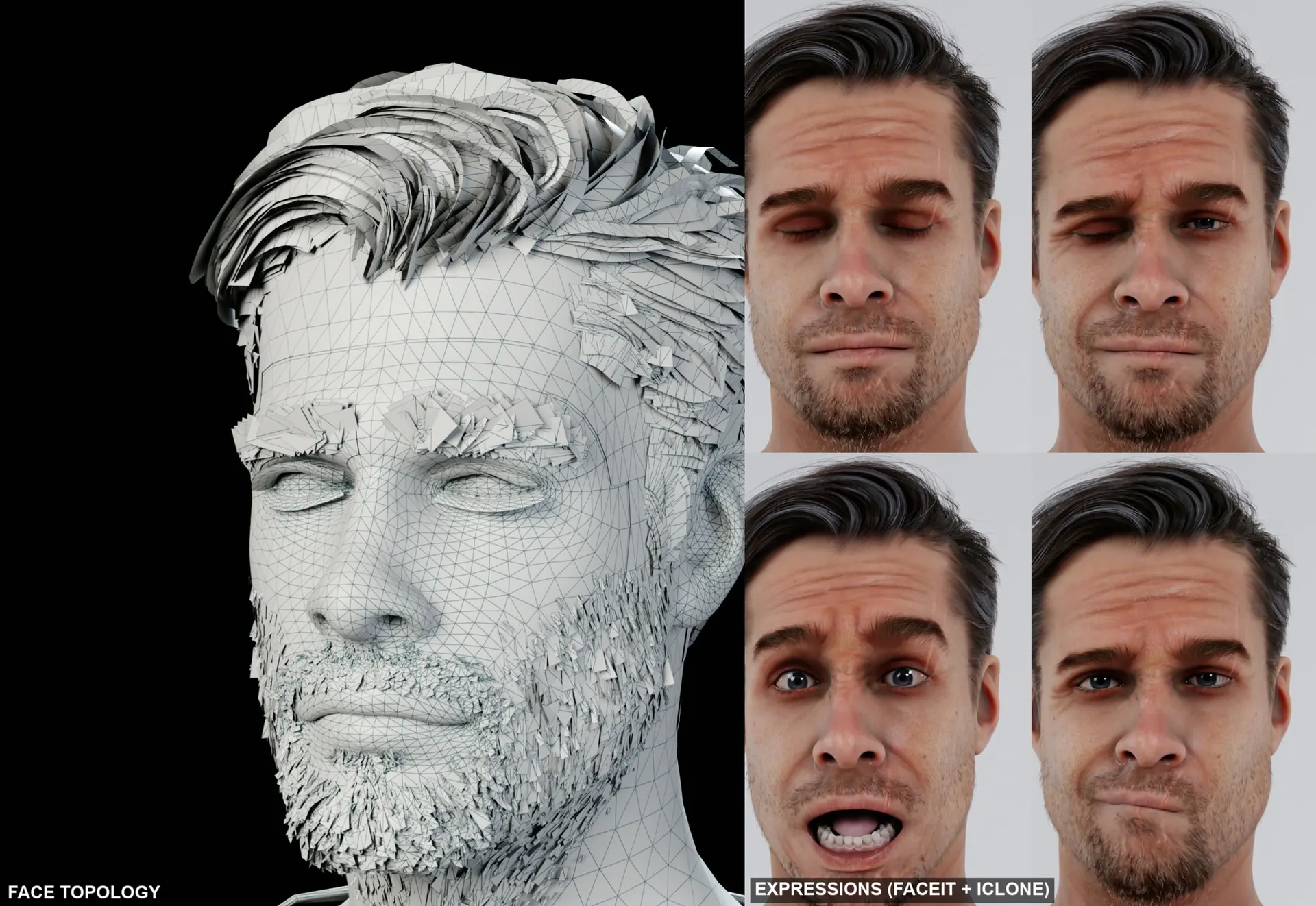
With suspense carried by non-verbal cues, topology was a performance decision. Clean edge flow around the face and joints fed the body and facial rigs. Body motion came from third-party motion-capture libraries, Mixamo and Rokoko, retargeted onto our rigs and refined shot by shot. Faces were animated with the Faceit add-on in Blender and in iClone.
Moonlight first, candlelight for faces
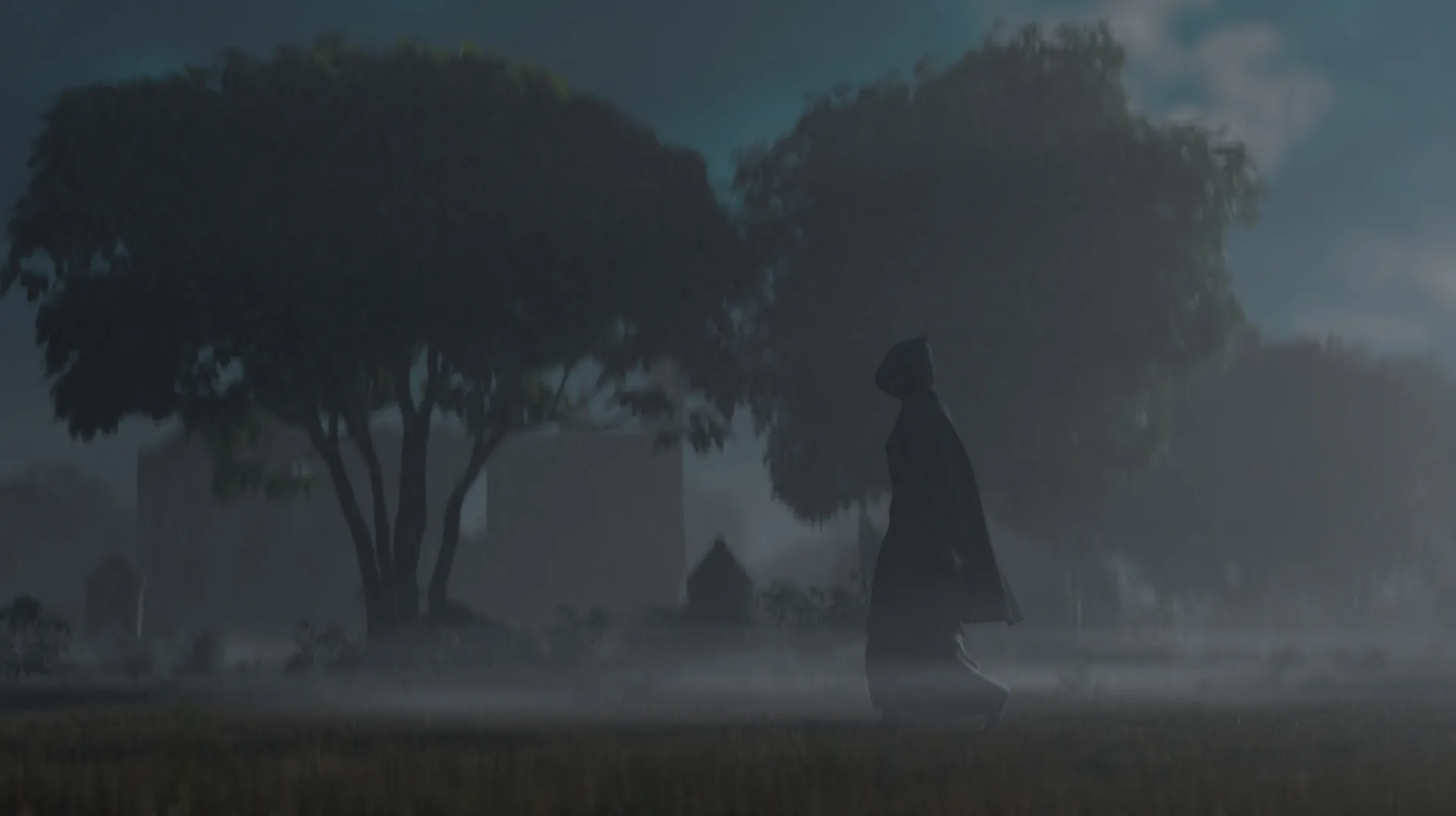
Moonlight sets the mood of every scene. It is a cool, low key light plus HDRI environment lighting, with global illumination for believable bounce. Lighting moves from deep-blue night scenes to fog-diffused twilight.
Ruined walls and open archways follow the moon’s path, so soft light reaches deep into the open graveyard.

Tree canopies break the light into organic patterns. Volumetric fog catches it and turns it into visible beams that set the mood and scale of each shot.
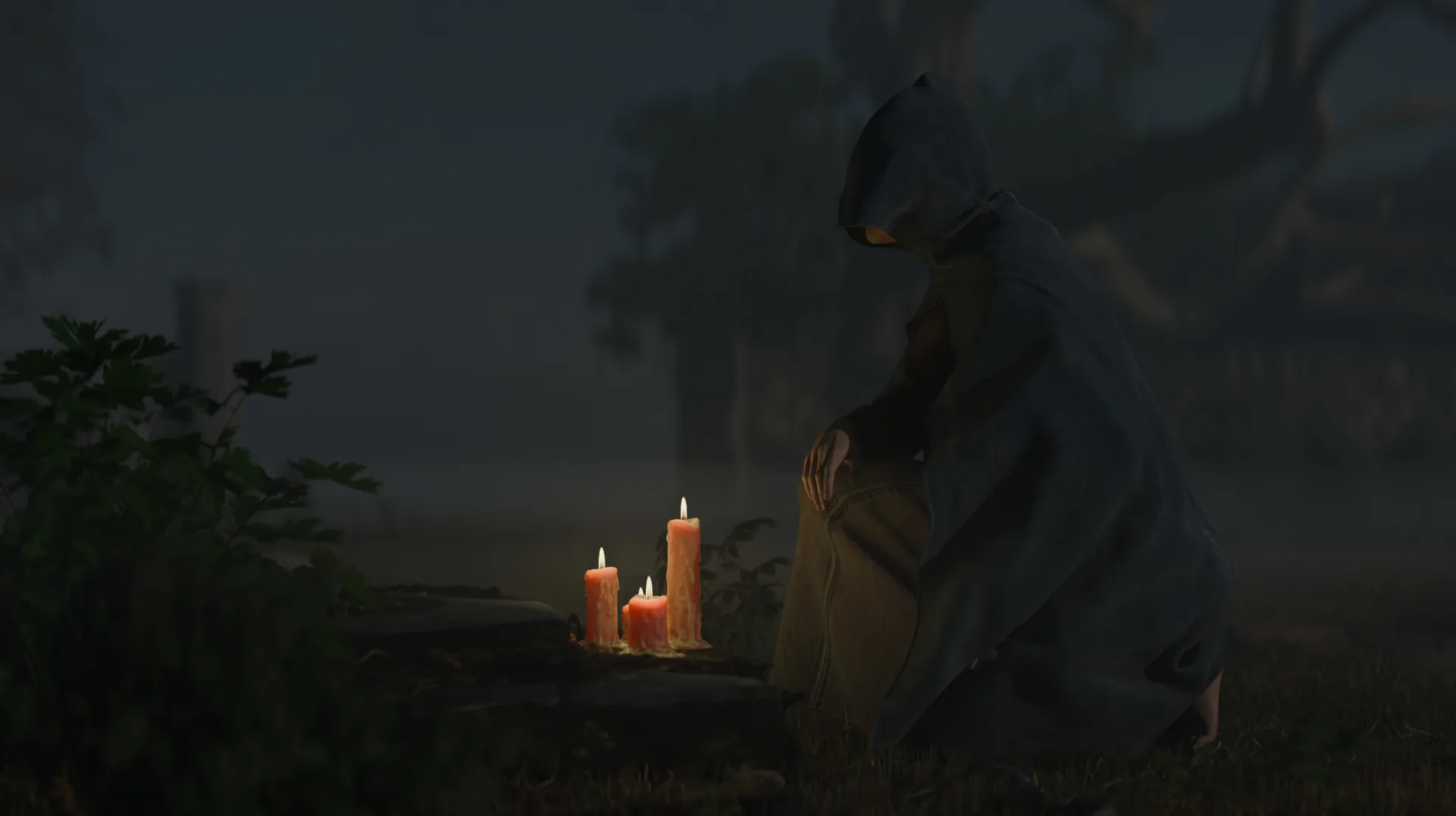
Where moonlight falls short, candlelight takes over. As the key light in close-ups, its warm flicker pulls the eye and sculpts texture out of deep shadow.
Black magic that glows wrong
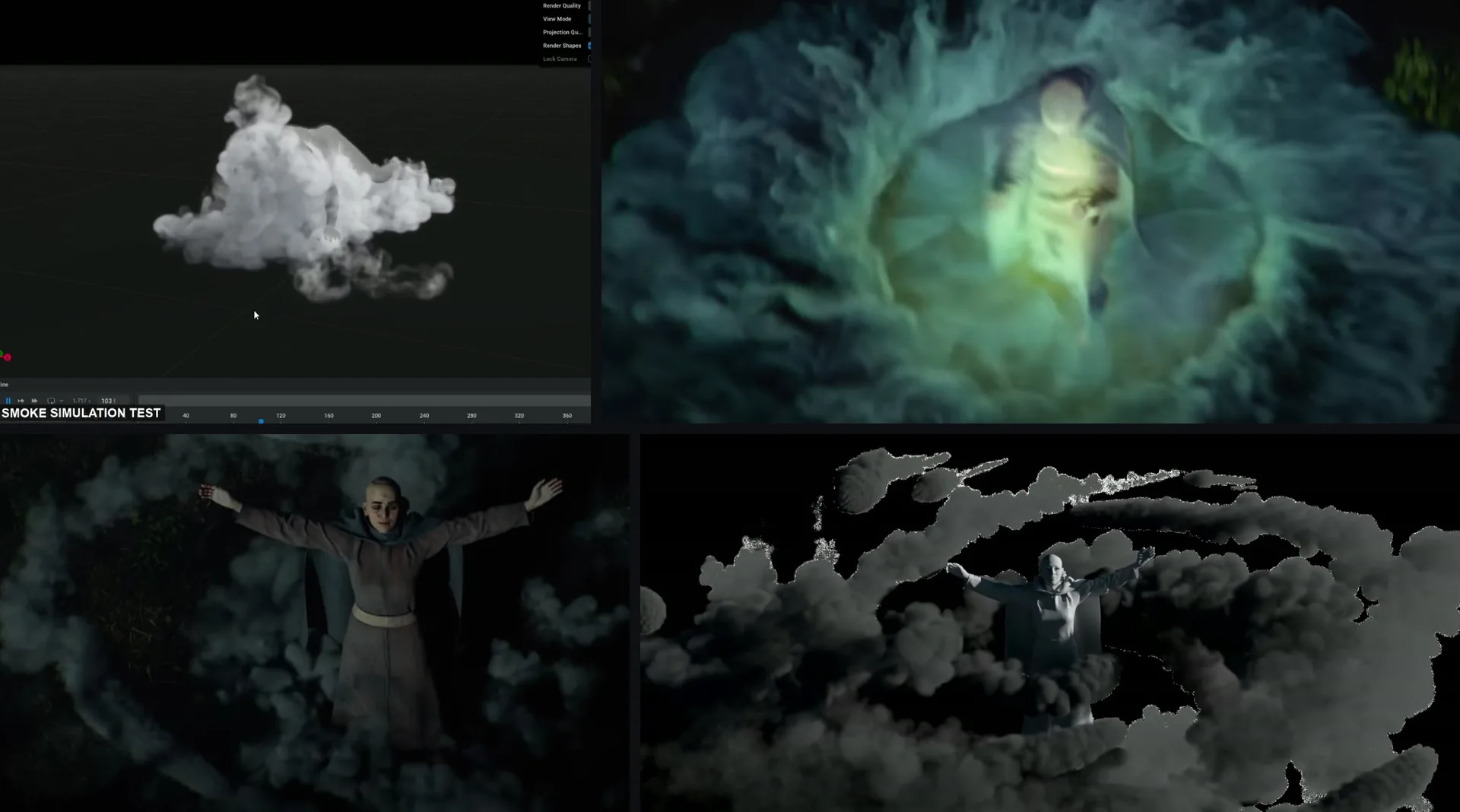
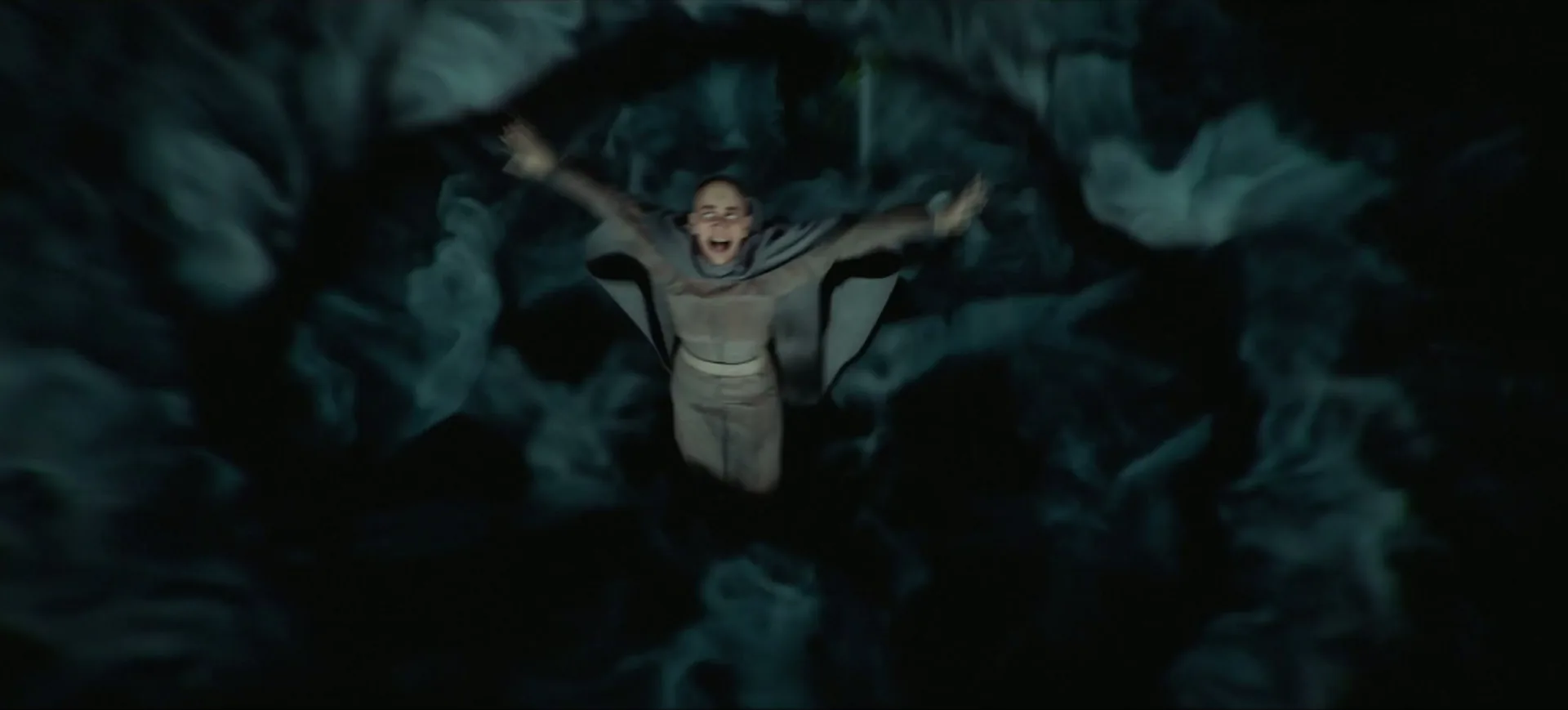
The magic combines dynamic volumetric smoke simulations with emissive materials for a glow that feels unnatural. A particle system drives swarms of fireflies, which add small moving light sources to the dark.
A hybrid soundscape
Suno AI generated unsettling atmospheric textures and effects tuned to the black-magic theme. AI also handled character dubbing and the sung portions of the score. Music producer Nasif Nipu then edited, layered and mixed it all into the final track. The song is also released as a single on Spotify and Apple Music.
Compositing as the final review
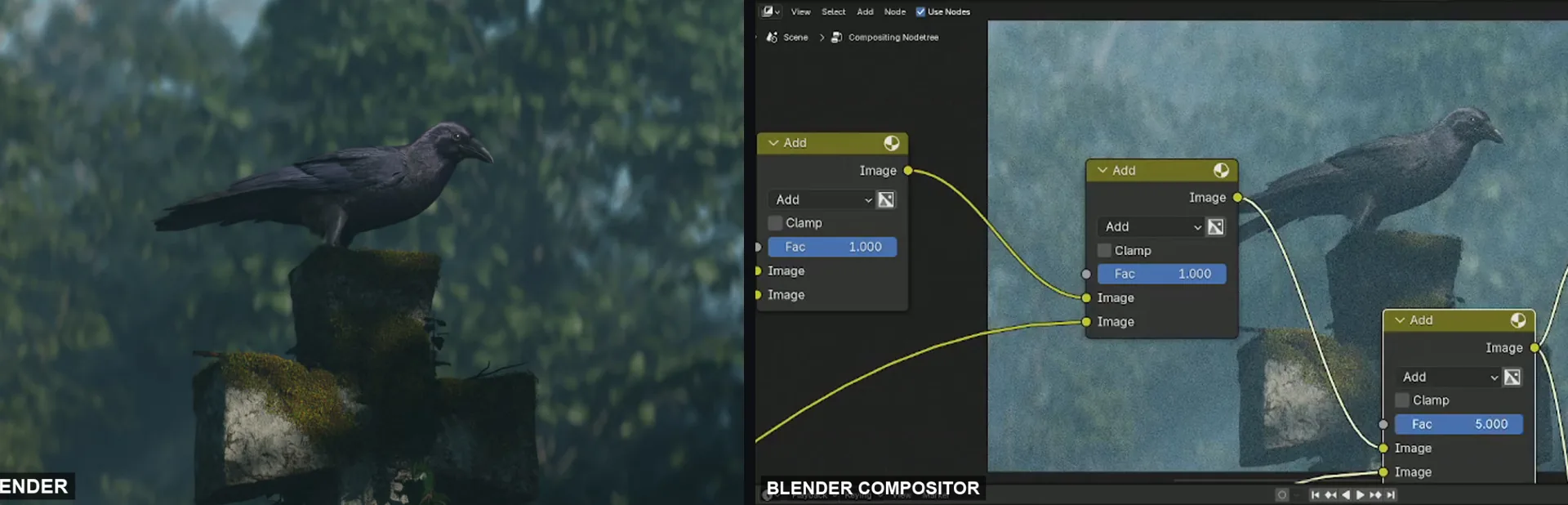
Compositing is where every element met for the first time, and where we judged the whole film. When something did not hold, we went back upstream to adjust a light or refine an effect. The final grade set the look and fused characters, magic and fog into one world. The image below shows the node tree of the Blender compositor for shot 1.
Pipeline and render breakdown
Forty shots ran through one pipeline. Characters were built in Character Creator and animated in iClone with Mixamo and Rokoko motion clips, and faces were animated in Faceit. Costumes were simulated in Marvelous Designer, sculpted in ZBrush and textured in Substance 3D Painter. Everything met in Blender, where scenes were dressed with scanned and library assets, lit and rendered in Cycles.
Smoke was simulated in EmberGen, then shots were composited in After Effects and cut in Premiere Pro.
By the numbers
| Shots | 40 |
| Film length | 2:42, plus the logo opener |
| Final frames | 4,851 rendered in Cycles |
| Logged render time | 99.2 hours, about 74 seconds per frame |
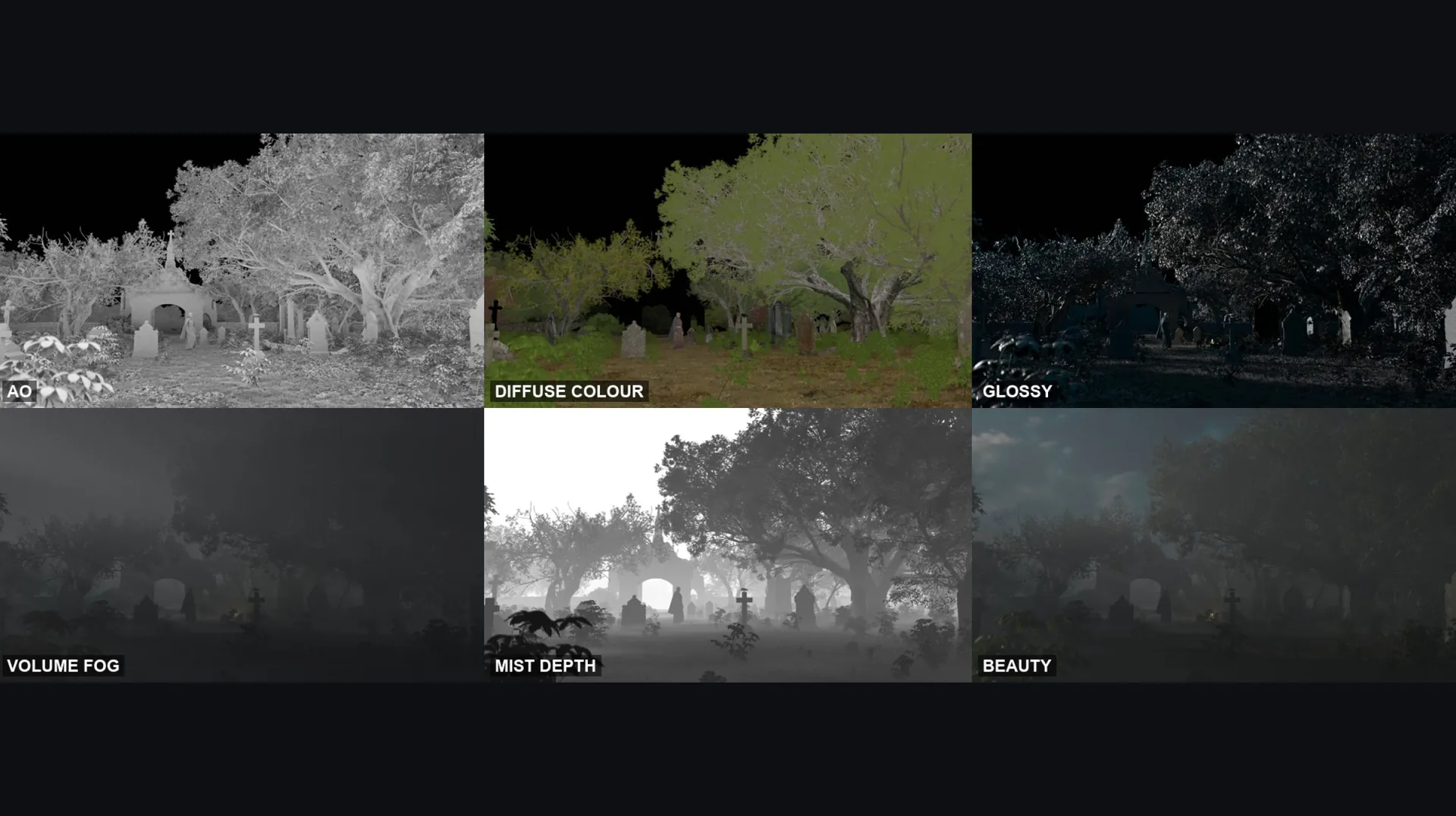
| Frame format | 1920 × 1080 multilayer EXR with AO, diffuse, glossy, volume, mist and normal passes |
Logged render time is the render-time metadata stored in the saved final frames. It leaves out tests, re-renders, simulations, baking and compositing.
Where the render time went
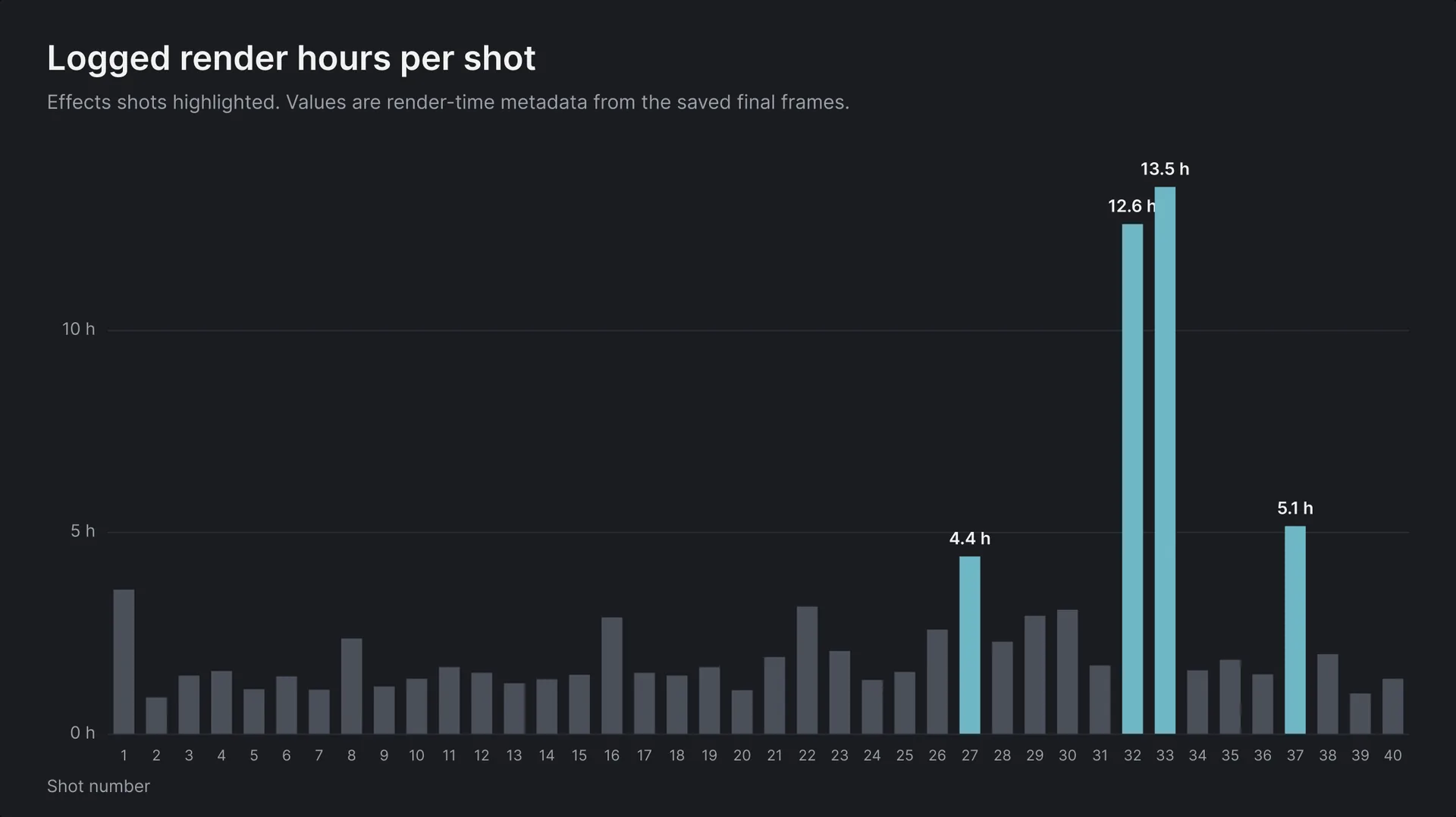
The four most expensive shots were all effects shots. The smoke shots SH33 and SH32 took 13.5 and 12.6 logged hours. The average across all 40 shots was about 2.5 hours. The smoke creatures (SH37) and the top-down ritual (SH27) followed at 5.1 and 4.4 hours.
Inside one frame
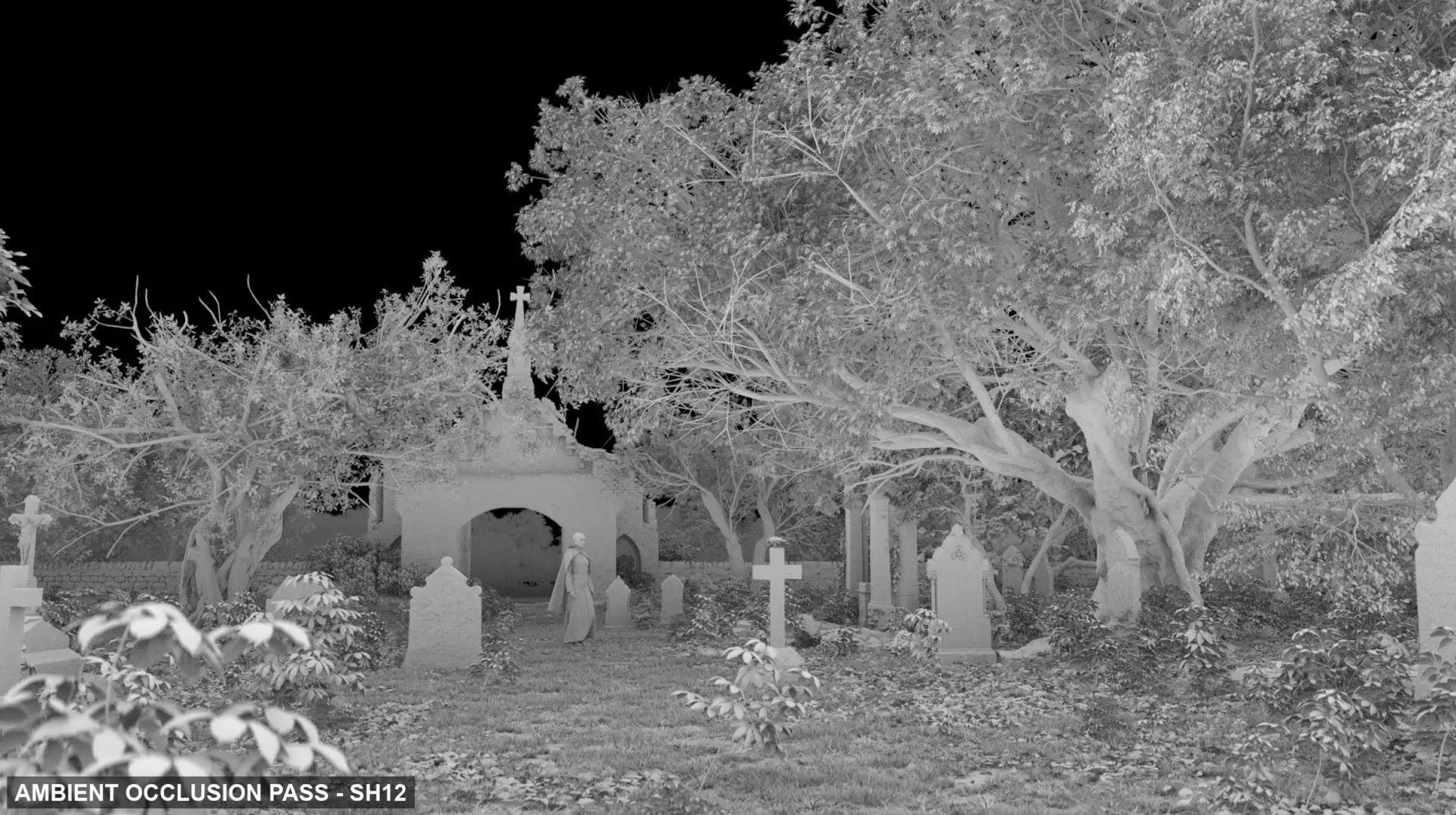
Every final frame was saved as a multilayer EXR, so each shot can be pulled apart again. Ambient occlusion shows form, diffuse colour shows texture, the volume pass shows fog and the mist pass shows depth.
Assembling the graveyard
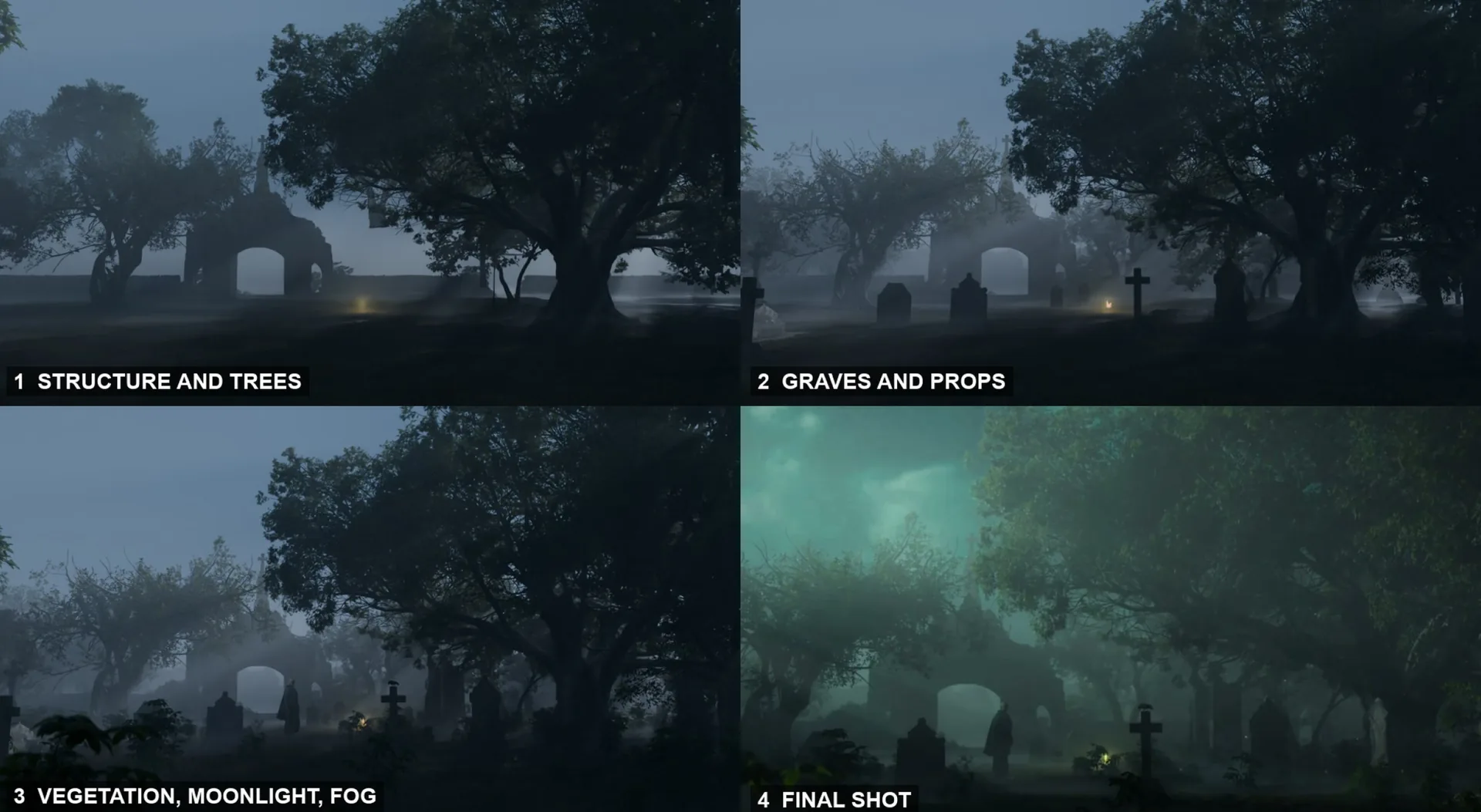
One graveyard environment carries most of the film, with up to around 800 objects per shot. Geo-Scatter and botaniq vegetation sits over ruins, tombs and trees. To show how it fits together, we re-rendered it as an assembly sequence, from ground to vegetation.
Challenges and solutions
Darkness that still reads
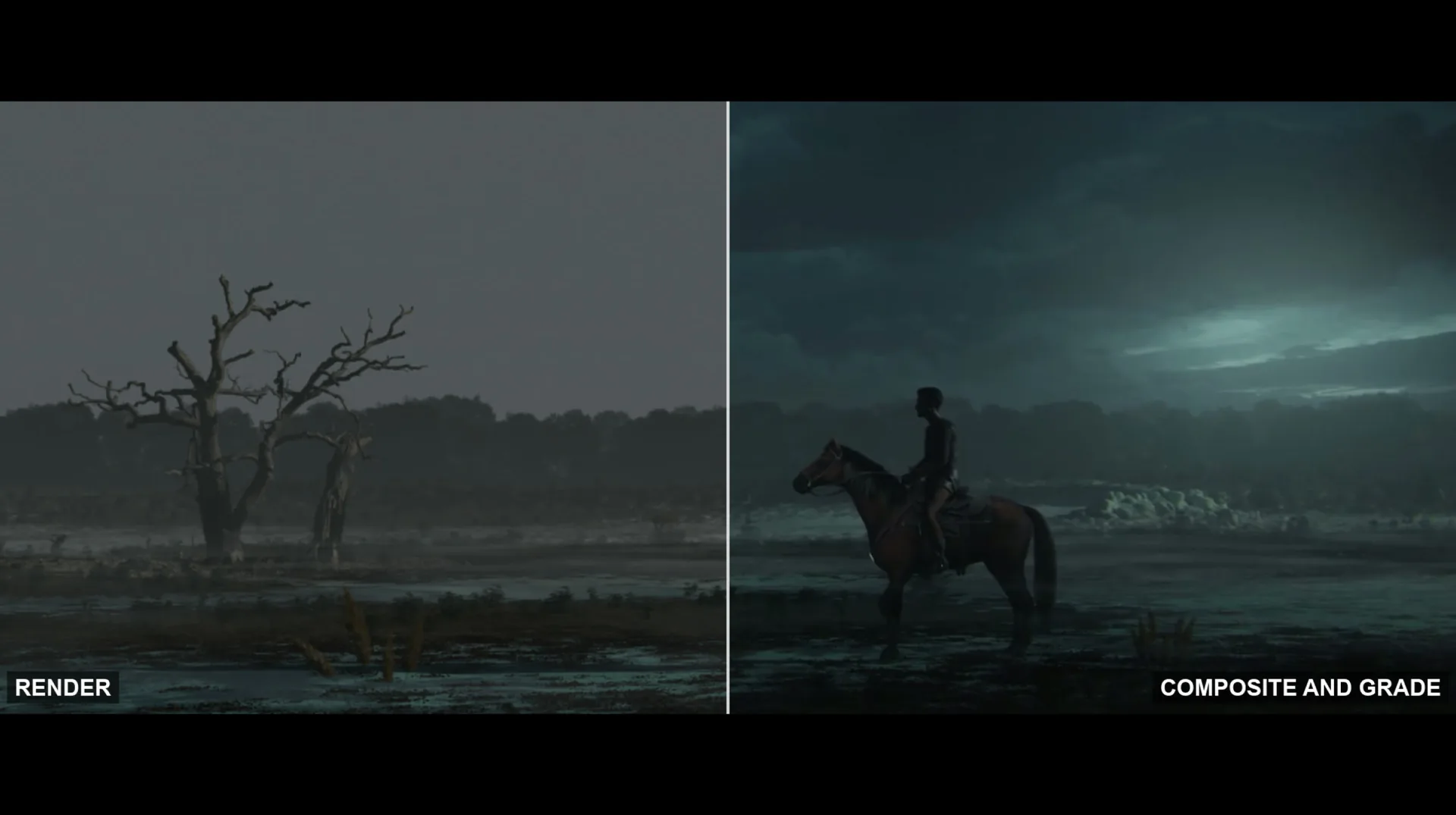
A night film depends on what the audience can see, and our raw renders came out very dark and flat. We lit every scene with a low, cool moon key and let volumetric fog catch it so silhouettes separate from the background. We finished the look in compositing and grade. The before and after of shot 6 shows the difference.
Smoke shots took about five times the average render time
Shots 33 and 32 took 13.5 and 12.6 logged render hours, against an average of about 2.5 hours per shot. We simulated the smoke in EmberGen and brought it into Blender as cached OpenVDB files that Blender loads as volume objects. Every shot was rendered as a multilayer EXR, so fog, glow and smoke could be balanced in compositing instead of re-rendering.
One graveyard, forty shots
A single shot could hold up to around 800 objects. Instead of building each shot separately, we built one master graveyard and reused it in every shot file, each with its own camera. Geo-Scatter and botaniq vegetation was instanced rather than modelled. That kept the world consistent from shot to shot and the files light enough to work in.
The result
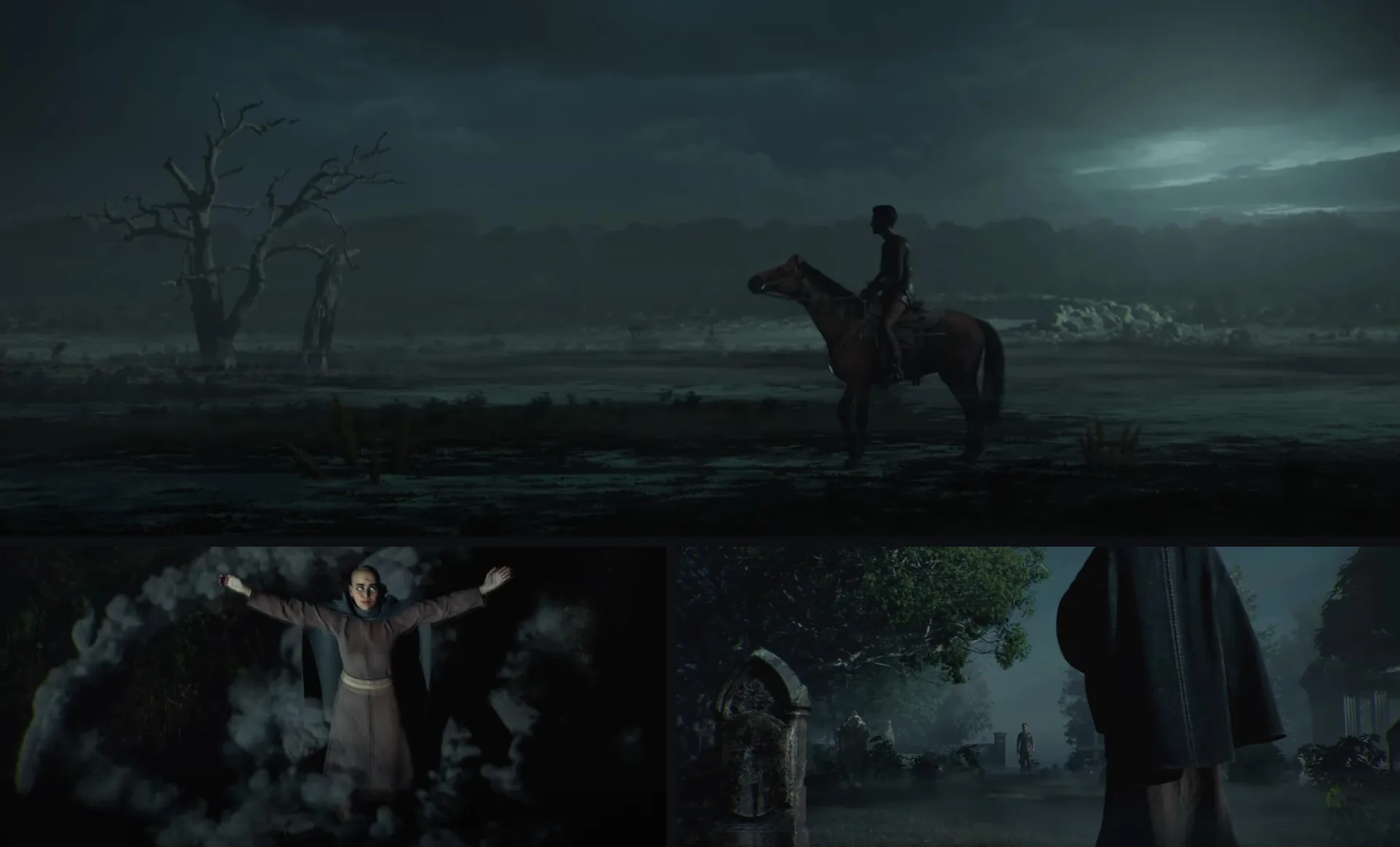
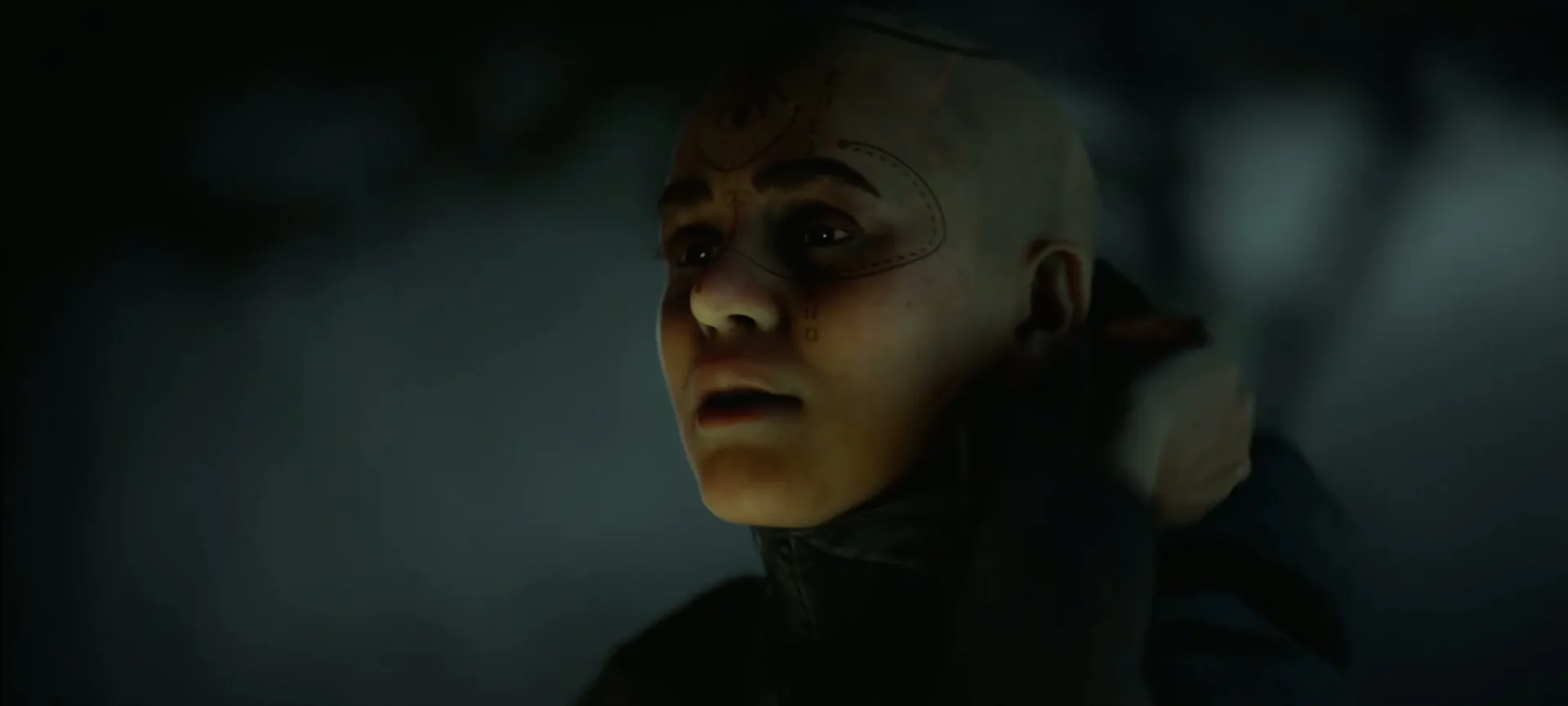
The finished video puts world-building, character performance, light, effects and sound into one piece.
Results
| Views | 18,361 on the Silence of Darkness YouTube video as of 29 November 2026 |
| Release | 15 July 2025 on the Null Plus YouTube channel · single on Spotify and Apple Music |
Credits
| Director | Ratul Biswas |
| Co-director and producer | RTB Ruhan |
| Music producer | Nasif Nipu |
| Team | The Null Station team |
| Asset credits | Voodoo doll by AnnaZangieva, licensed under Creative Commons Attribution 4.0. Photogrammetry and library assets from Quixel Megascans, Sketchfab and Poly Haven. Vegetation from botaniq and Geo-Scatter. |
| Motion capture | Motion clips from Mixamo (Adobe) and Rokoko |
| Characters and faces | Characters made in Character Creator. Faces animated with Faceit and iClone. |
For a game-side example of how we build environments and props, read our BLACKWOOD environment and prop art case study.
